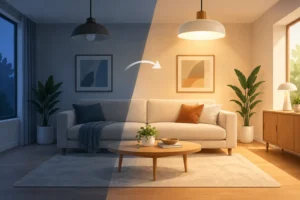
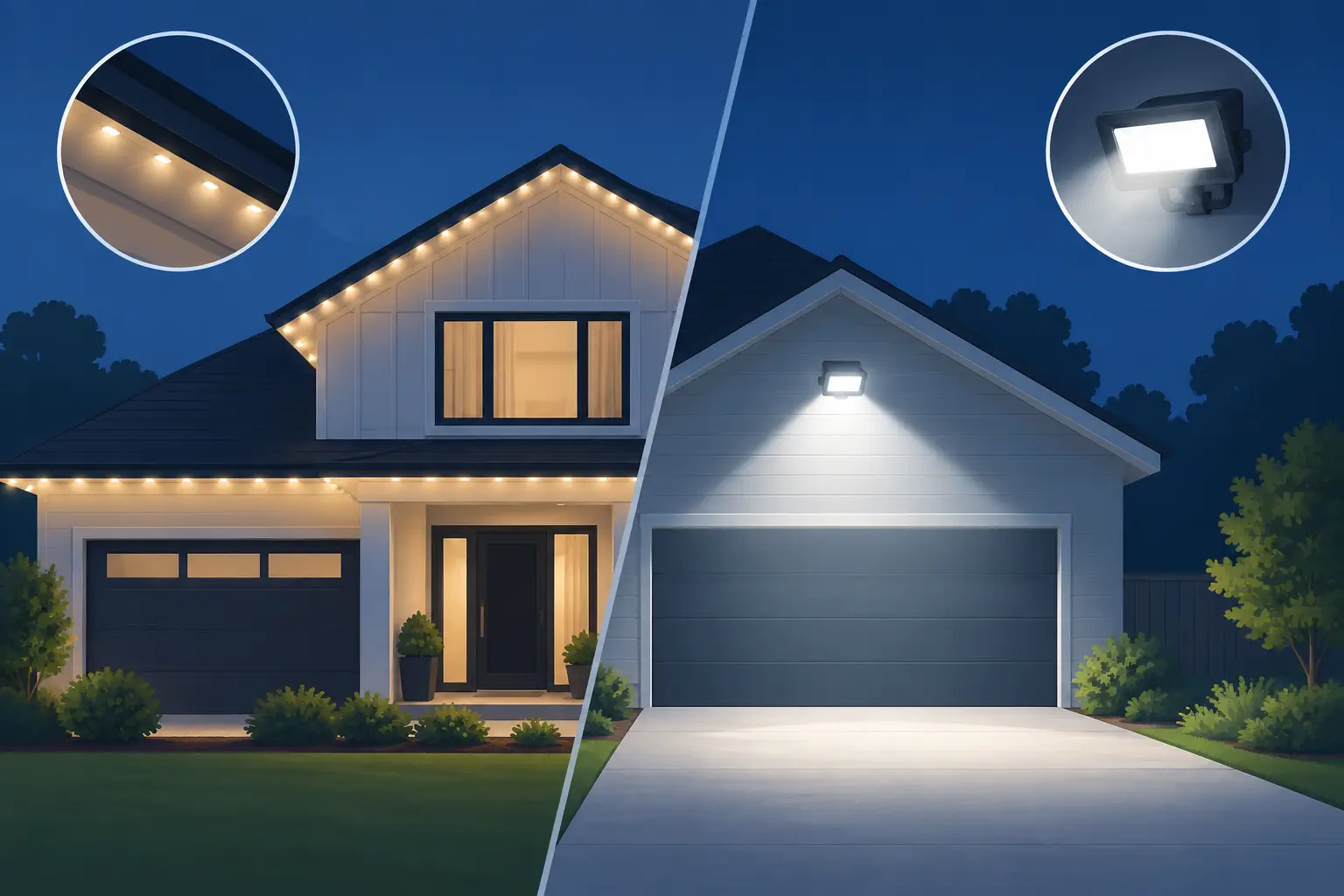
A single floodlight can make a driveway safer. It cannot make a home look finished from the street, set the mood for a backyard birthday, or outline a business in team colors after sunset. That is the real decision behind roofline LEDs versus floodlights: broad utility lighting versus a permanent architectural lighting system designed to improve how your property looks, feels, and functions every night.
For North Texas homeowners and business owners, both have a place. The smarter investment depends on what you want the light to accomplish – and whether you want a temporary bright spot or a polished exterior that is ready for every season.
Roofline LEDs Versus Floodlights: The Core Difference
Floodlights are directional fixtures. They cast a wide beam toward a target area, such as a driveway, gate, parking lot, loading area, patio, or side yard. Their job is practical: illuminate a large space quickly and make movement around the property easier to see.
Permanent roofline LEDs are architectural fixtures. Installed in color-matched aluminum tracks beneath the fascia, they follow the shape of the roofline in a clean, intentional pattern. Rather than washing one section of the property with light, they define its lines. The effect is less like a security fixture and more like a custom lighting design.
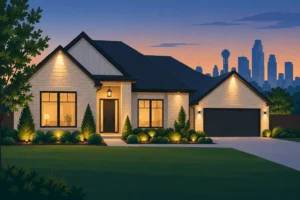
That distinction matters. A home with floodlights may be well lit, but it can still disappear into the street at night. A home with professionally installed roofline lighting gains a clear silhouette, warm evening presence, and the ability to shift from understated white to full holiday or celebration color with a few taps in an app.
For commercial properties, the difference is even more visible. Floodlights help customers navigate a parking area. Roofline LEDs help customers recognize the building, notice the storefront, and remember the brand.
Where Floodlights Still Make Sense
Floodlights are not inferior by default. They are the right tool when the priority is task lighting, security coverage, or visibility in a specific area. A motion-activated floodlight near a rear gate, garage side door, or dark section of a commercial lot can be a useful addition to a complete exterior lighting plan.
Their strength is beam spread. One properly placed fixture can illuminate a broad patch of pavement or yard, which makes floodlights practical for spaces where people need to walk, park, work, or monitor activity after dark.
The trade-off is appearance. Standard floodlights can produce harsh glare, bright hot spots, and deep shadows just outside the beam. If aimed poorly, they can shine into windows, bother neighbors, or make a beautiful facade look flat and overexposed. Motion sensors can also be inconsistent, triggering from pets, passing cars, or wind-blown landscaping.
Floodlights are functional. They are rarely the feature that makes a property feel luxurious, welcoming, or celebration-ready.
Why Permanent Roofline Lighting Delivers More Visual Impact
Roofline LEDs create a balanced pattern of light across the property rather than concentrating all brightness in one direction. Tightly spaced, high-output fixtures can trace gables, peaks, eaves, and architectural transitions with crisp definition. The result is visible from the street without looking like a row of exposed bulbs or a temporary holiday setup.
Premium systems use dedicated warm-white diodes in addition to RGB color diodes. That matters because true warm white has a comfortable, upscale appearance for everyday use. Many lower-grade RGB-only systems attempt to create white by blending colors, often producing a bluish or washed-out result. If you want elegant nightly lighting in January as much as bold Christmas scenes in December, the quality of the white light is not a minor detail.
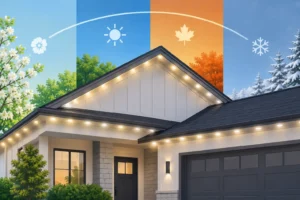
Roofline lighting also gives you range without adding clutter. One system can provide a soft warm-white outline for a dinner party, orange and purple for Halloween, red and green for Christmas, school colors for a game day, or a custom sequence for a birthday. Once the tracks and wiring are professionally installed, the roofline stays clean. There are no extension cords across the lawn, no clips on shingles, and no annual ladder work.
That is why many homeowners see permanent LEDs as more than holiday lighting. They are a curb-appeal upgrade that happens to make every holiday easier.
Brightness Is Not Just About More Lumens
When comparing roofline LEDs versus floodlights, it is easy to focus only on brightness. But brightness without control can make a property look worse, not better.
Floodlights are typically measured by how much area they can illuminate. Their output is concentrated in a broad, forward-facing beam. For security or navigation, that is useful. For architectural detail, it is blunt.
Roofline LEDs use distributed points of light. Each fixture contributes to an even visual rhythm along the structure. High-output LEDs with close spacing remain visible from the curb, but the installation is designed to complement the home rather than blast light across the neighborhood.
A professional designer considers viewing distance, roof height, fascia color, peak placement, surrounding ambient light, and how the property looks from the road. A one-story ranch home, a two-story brick home with multiple gables, and a storefront facing a busy road should not receive the same layout. Custom fitting is what separates a luxury-grade system from a generic lighting kit.
Installation Quality Determines the Long-Term Result
The best lighting concept can be undermined by poor installation. Exposed wiring, loose tracks, uneven fixture spacing, mismatched trim, and poorly protected connections all become obvious over time – especially through North Texas heat, storms, and seasonal weather changes.
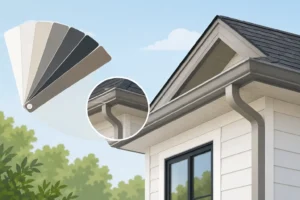
A permanent roofline system should be installed with color-matched aluminum track, concealed wiring, weather-ready components, and an electrical plan that respects the property and applicable code requirements. Proper voltage and controller design support dependable performance while reducing the patchwork look that often comes with DIY systems.
Professional installation also protects the roofline itself. The goal is not merely to attach lights to a house. It is to integrate a system that looks original to the architecture, operates reliably, and can be supported long after installation day.
Floodlights deserve the same care. They should be mounted at the correct height, aimed away from neighboring windows, placed to avoid unnecessary glare, and wired safely. A floodlight installed as a quick fix may solve one dark corner while creating a nuisance everywhere else.
Control, Convenience, and Seasonal Flexibility
The biggest lifestyle advantage of roofline LEDs is control. App-based scenes and scheduling allow you to set lights to come on at dusk, turn off at bedtime, change colors for holidays, or run a simple warm-white display without touching a ladder or timer.
For a family home, that means the exterior can feel special on ordinary evenings, not just major holidays. For a business, it means the building can reflect a grand opening, local event, charity drive, playoff run, or seasonal promotion without paying for repeated temporary installations.
Floodlights may offer basic controls such as motion activation, photocells, dimming, or schedules. Those features are useful, but they do not offer the same creative flexibility. A floodlight is usually either on, off, or dimmed. Roofline LEDs can become part of the property’s personality.
The Best Choice May Be Both
Choosing between these options does not always mean choosing one exclusively. Many properties benefit from layered exterior lighting.
Use roofline LEDs for architectural presence, curb appeal, seasonal color, and everyday ambiance. Use floodlights where you need practical coverage: a dark backyard, driveway approach, service entrance, side gate, dumpster area, or parking zone. Together, they can create a property that is safer to use and far more impressive to see.
The key is avoiding the assumption that a bright floodlight can replace architectural lighting. It cannot. Likewise, roofline LEDs are not meant to replace targeted security illumination in every dark corner.
Forney-area properties deserve lighting that looks intentional from the road and works reliably after dark. Starry Night Lights designs permanent systems around the architecture, the way you use the space, and the moments you want to celebrate. Start by standing across the street after sunset and asking a simple question: does your property merely have light, or does it make an impression?