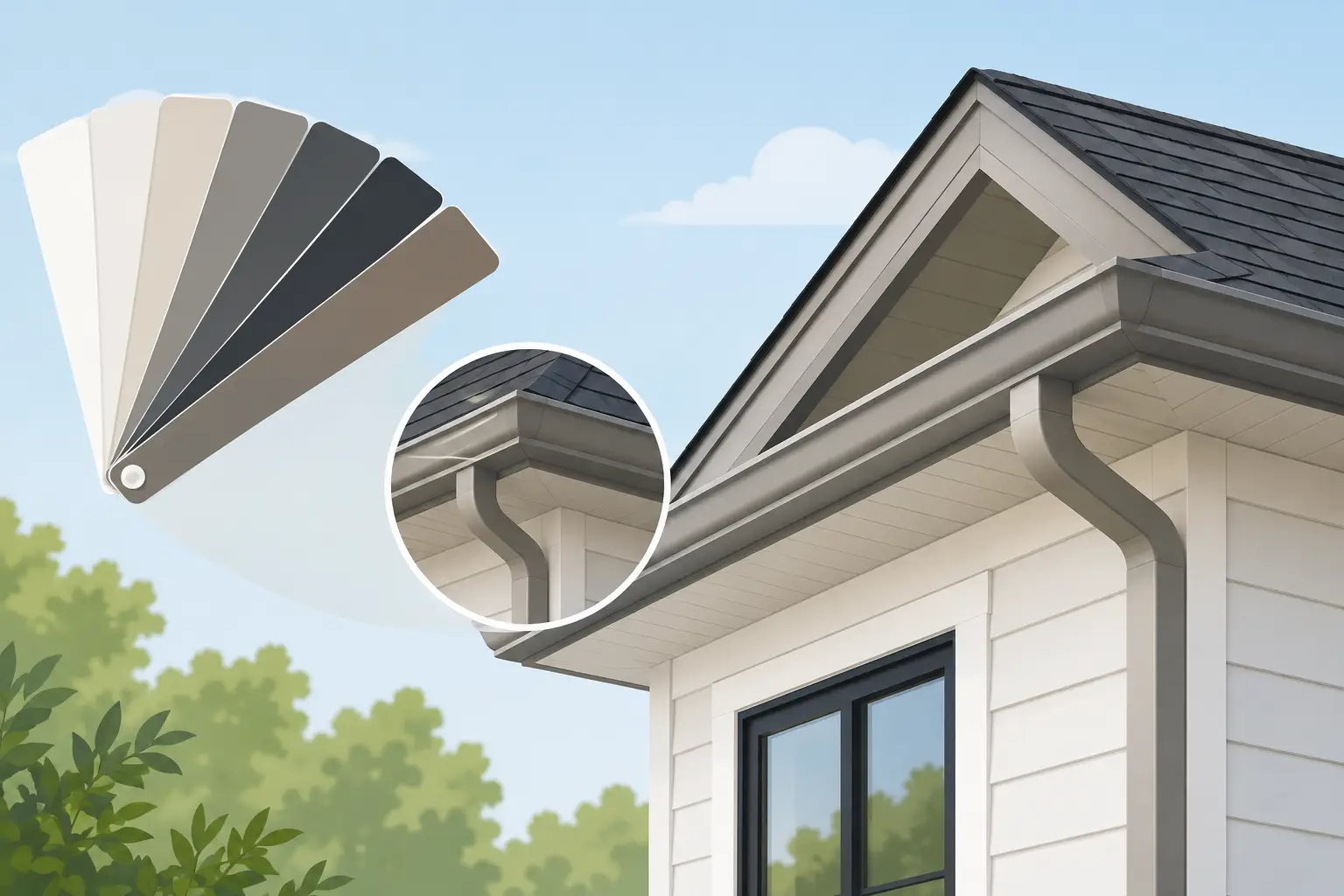
A permanent lighting system should make your home look exceptional at night without making it look modified during the day. That is the standard behind a proper roofline color matching guide. The LEDs get attention after sunset, but the track is what determines whether the installation looks custom-built for your property or like an add-on attached beneath the eaves.
For North Texas homeowners and business owners, color matching is not a minor finishing detail. Bright sun, dust, changing paint colors, brick undertones, and highly visible front elevations can expose a poor match quickly. The goal is simple: select an aluminum track color and installation location that allow the system to visually disappear in daylight, then deliver rich, reliable color after dark.
Start With the Surface That Will Hold the Track
Do not choose a track color based only on the overall color of the house. Permanent roofline lighting is usually mounted beneath the soffit, along the fascia, or in another protected roofline position. That means the best match is typically the surface immediately beside the track, not the siding, brick, stone, or roof shingles several feet away.
A light gray home may have white soffits. A warm brick exterior may have dark bronze fascia. A black roof may be paired with charcoal gutters but a cream-colored underside of the eaves. If the track is installed under the eave, matching it to the dark roof rather than the pale soffit can create a visible stripe across the front of the house.
At a commercial property, the same principle applies. Match the track to the parapet, fascia cap, soffit panel, or awning structure where it will actually sit. A clean, concealed installation protects the building’s daytime appearance while preserving the dramatic after-hours visibility that businesses need.
Soffit, Fascia, and Gutter Colors Are Not Interchangeable
These components often look similar from the street, but they are viewed from different angles and catch light differently. Soffit material is commonly matte aluminum or vinyl and sits in shadow. Fascia can be painted wood, metal wrap, or composite trim with a more noticeable sheen. Gutters may be glossier still.
A track that perfectly matches a white gutter may look too bright against an off-white soffit. Likewise, a bronze track can disappear against a bronze fascia but look nearly black when installed beneath a tan eave. Professional design starts with the intended mounting plane, then evaluates color from normal viewing areas such as the driveway, sidewalk, street, patio, or parking lot.
A Roofline Color Matching Guide for Common Exteriors
White remains one of the most forgiving choices when the system is mounted against bright white soffit, trim, or fascia. But not every white is the same. Stark white, soft white, cream, and weathered white can look noticeably different in Texas daylight. On an older home, an exact factory white may still be more visible than a softer finish that better reflects the existing trim.
Black and dark bronze tracks are popular on modern homes, dark gutters, stained wood accents, and commercial buildings. They can create a particularly clean result when tucked into shadowed roofline areas. The trade-off is that a very dark track becomes obvious against light soffit, even when the roof itself is dark.
Brown, bronze, and tan options work well around earth-tone brick, stone, and painted trim, but undertones matter. A brown with a red cast can fight against cool gray stone. A bronze with green or gray undertones may look wrong beside warm tan aluminum. Samples viewed outdoors are far more reliable than a color name or a photo on a phone screen.
Gray can be the right answer for contemporary homes with charcoal trim, metal roofing, or cementitious siding. Yet gray is also one of the easiest colors to miss. Blue-gray, warm gray, and taupe-gray may appear nearly identical in a showroom and very different under direct afternoon sun.
Look at Samples Outside, Not Under Indoor Lighting
Interior lighting can hide undertones and distort sheen. A color sample should be checked outside at multiple times of day, especially on the side of the building where the track will be installed. Morning light, strong midday sun, and evening shade all reveal different aspects of the finish.
Hold the sample flat against the soffit or fascia rather than several inches away from it. Then step back. A perfect match at arm’s length is less useful than a close match that disappears from the curb. View it from the angle your neighbors, guests, and customers will actually see.
This matters even more for commercial rooflines. A storefront may look one color under daylight, another beneath canopy lights, and another under street lighting after sunset. The track should support the building’s presentation in every condition without becoming a distracting line above the entrance.
Consider Age, Weathering, and Future Paint Plans
The existing exterior may have faded. Sun exposure is not equal across every side of a property, so a once-uniform soffit can now vary from front to back. Dust and seasonal pollen also alter how light-colored surfaces read from a distance.
Matching the current appearance is usually the right choice if repainting is not planned soon. If an exterior update is already scheduled, coordinate the lighting design before painting. Choosing a durable track color around the planned soffit or fascia finish prevents a new paint job from making an otherwise excellent installation look mismatched.
There is also a practical limit to color matching. A custom-finished track may improve a difficult architectural match, but it can add cost and lead time. Sometimes a standard color installed farther under the eave delivers the cleaner result because shadows naturally conceal it. Design, placement, and finish work together.
The Track Finish Is Only Part of the Daytime Look
A color-matched track cannot rescue a poorly planned installation. Visible wiring, oversized gaps between fixtures, crooked runs, exposed fasteners, or loose corners draw the eye no matter how close the color may be. This is where professionally engineered systems separate themselves from consumer kits and rushed seasonal installs.
Luxury-grade aluminum tracks should be cut and fitted to the architecture, with wiring concealed and runs aligned to the roofline. The fixtures should sit at consistent spacing so the system looks intentional when off and produces even pools of light when on. When the track is selected correctly and installed precisely, guests notice the house, not the hardware.
Starry Night Lights designs each permanent lighting layout around that complete visual standard. The goal is not simply to attach color-changing LEDs to a roof. It is to create a clean architectural lighting feature with app-controlled scenes for holidays, game days, birthdays, security, and everyday warm-white curb appeal.
Choose Light Colors Separately From Track Colors
Track color solves the daytime camouflage question. LED color capability solves the nighttime experience. They should not be confused.
A dark track does not limit you to dark-looking lighting, and a white track does not guarantee a warm, flattering white after sunset. The quality of the LEDs matters. Premium RGBW systems include a dedicated warm-white diode instead of attempting to mix a pale white from red, green, and blue. That difference shows up on the roofline as a fuller, more natural white for ordinary evenings and elegant exterior lighting.
Brightness and fixture spacing matter too. Sparse, low-output lights can create dotted lines or weak color that disappears from the street. Closely spaced, high-output fixtures create consistent illumination across peaks, valleys, dormers, and long commercial facades. The right system can run a refined warm-white scene on Tuesday, school colors on Friday, and a holiday pattern in December without leaving permanent clutter or seasonal ladder work behind.
Questions to Settle Before Installation
Before approving a lighting design, make sure the contractor can answer four practical questions: Where exactly will the track mount? Which surface is it being matched to? How will wiring and transitions be concealed? What will the system look like from the street when the lights are off?
Ask to see actual track samples against your exterior. Discuss any planned paint, gutter, or roof work. If the home has several exterior finishes, do not assume one track color is automatically right for every elevation. A qualified installer can explain whether one finish will blend throughout or whether placement changes are needed to keep the design cohesive.
The best color match is the one you stop seeing. When daylight comes, your roofline should still look crisp and intentional. When evening arrives, it should be ready for one-button celebration, polished visibility, and the kind of curb appeal that makes the best-looking house on the block feel even better to come home to.