
A permanent lighting system should remove a chore from your calendar, not add a warranty dispute to it. Before you compare colors, app features, or price, use a permanent lighting warranty comparison to find out who is responsible when a light fails, a controller stops responding, or an installation issue appears years after the crew leaves.
For North Texas homes and businesses, that question matters. Summer heat, hail, wind-driven rain, roofline movement, and everyday electrical demands can expose weaknesses in products and workmanship. A warranty is not just a number printed on a proposal. It is evidence of what the manufacturer and installer believe their system can handle.
What a Permanent Lighting Warranty Actually Covers
The first mistake buyers make is treating every warranty as a single promise. Most permanent lighting systems have separate coverage for the product, the installation labor, and sometimes the controller or power components. A long LED warranty can sound impressive while leaving the customer responsible for diagnosing, accessing, and replacing the part.
Start by asking whether the warranty covers materials only or parts and labor. Materials-only coverage may provide a replacement light, track section, or controller, but it may not pay for a technician to troubleshoot the issue, remove components from the roofline, and reinstall the replacement. On a two-story home or a commercial facade, labor is not a minor detail.
Also ask whether coverage is prorated. A prorated warranty may offer decreasing credit as the years pass. That can be reasonable in some product categories, but homeowners should understand the difference between a full replacement commitment and a partial discount on a future repair.
The strongest proposals clearly separate these promises in writing: what the manufacturer covers, what the local contractor covers, how long each term lasts, and what happens when service is needed.
Permanent Lighting Warranty Comparison: Read the Fine Print
A meaningful permanent lighting warranty comparison goes beyond the headline term. A company advertising a 10-, 15-, or 20-year warranty may be offering excellent protection, but only if the underlying terms fit the system you are buying.
LED modules and color performance
Ask what qualifies as an LED failure. Is a completely dark light covered? What about a module that turns the wrong color, flickers, dims noticeably, or loses its warm-white output? Premium RGBW systems use a dedicated warm-white diode rather than mixing red, green, and blue to approximate white. That creates a cleaner, more inviting roofline for everyday use, and the warranty should recognize the full functionality of that module.
It also helps to ask whether coverage applies to individual lights or only to a certain percentage of failed fixtures. A system can technically still operate while a few dim or mismatched pixels interrupt an otherwise polished architectural line.
Tracks, wiring, and concealed components
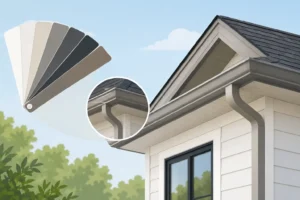
Color-matched aluminum tracks and concealed wiring do more than make the installation look finished. They protect the system from sun exposure, moisture, and the visual clutter of exposed cords. Yet not every warranty treats these components equally.
Look for specific language around track finish, cracking, warping, corrosion, and connection failures. North Texas weather is hard on exterior materials. If the system is designed to live on the home for decades, the mounting method and wire management deserve as much attention as the LEDs themselves.
Controllers, power supplies, and app access
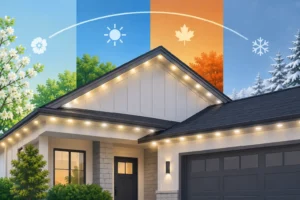
The controller is the operating center of permanent lighting. It is what lets you choose warm white for a quiet evening, school colors for game day, a birthday scene for the kids, or a full holiday display with a few taps. If it fails, the whole experience can stop.
Ask whether the controller and power supply carry the same warranty term as the lights. They often do not. Find out whether app support, firmware updates, remote troubleshooting, and replacement setup are included. A replacement controller is not particularly helpful if you are left to reprogram zones, reconnect Wi-Fi, and rebuild every scene on your own.
Installation workmanship
Product coverage cannot fix poor workmanship. A professionally installed system should account for proper fastening, weather-resistant connections, electrical load, clean routing, and the architecture of the property. On commercial buildings, code compliance and serviceability become even more important.
A workmanship warranty should state how long the installer stands behind mounting, wiring, connections, and installation-related defects. It should also name the party responsible. A national product brand may honor a hardware warranty, but it may not send a local technician to Forney to inspect a loose connection or a roofline-specific issue.
Questions That Reveal the Real Value
You do not need to be an electrician to compare permanent lighting warranties intelligently. You do need direct answers. Ask these questions before signing a contract:
- If one light, a controller, or a power supply fails, who diagnoses the problem and who pays for the service visit?
- Does coverage include labor, lift access, removal, and reinstallation, or only the replacement part?
- Are color inconsistency, flickering, moisture-related failures, and warm-white diode issues covered?
- Is the warranty full-term or prorated, and are there registration requirements or transfer restrictions?
- Who provides local support after installation: the installing contractor, a manufacturer hotline, or both?
- What events are excluded, including storm damage, power surges, roof replacement, remodeling, misuse, or unauthorized modifications?
The answers should be clear enough to compare line by line. If a provider cannot explain the service process without vague phrases such as “limited lifetime coverage,” assume the details may be less generous than the marketing.
Why the Cheapest System Can Cost More Later
A lower upfront quote can be attractive, especially when several companies promise similar colors and app control. But permanent lighting is not a disposable string-light purchase. It is an exterior electrical system attached to one of the most visible parts of your property.
Consumer-grade and lightly installed systems may use wider fixture spacing, lower-output LEDs, limited white capability, exposed wiring, or components that are difficult to service. Their warranties can reflect that reality. Some protect a part for a short period but exclude labor. Others require shipping a failed component back, waiting for a replacement, and finding someone to install it.
There is a trade-off here. A premium installed system costs more because the price includes engineered components, tailored layout, professional labor, and a support relationship. For a homeowner who wants the best-looking house on the block every December, plus warm white lighting, game-day color, and security-minded illumination all year, that support has real value. For a business, it helps protect nightly visibility and the polished appearance customers notice from the street.
Compare the Company Behind the Promise
The warranty is only as useful as the company that will answer the phone. A long manufacturer term is reassuring, but homeowners should ask whether the installer has a local service team, established supplier relationships, and experience with the exact system being installed.
This is where contractor-led installation differs from a box shipped to your door. A qualified local team designs around roof peaks, dormers, soffits, gutters, and electrical access. They understand how to keep the line straight, the lights hidden when off, and the output consistent when on. Just as important, they can return if the system needs attention.
Starry Night Lights approaches coverage as part of the complete ownership experience, not an afterthought on a quote. The goal is straightforward: install a luxury-grade lighting system that looks intentional on day one and remains serviceable long after the first holiday season.
A Better Standard for Long-Term Protection
Do not choose permanent lighting based on warranty length alone. Choose the combination of durable hardware, professional workmanship, written coverage, and responsive local support. A 20-plus-year protection proposition may be compelling, but ask what it means for the LEDs, tracks, controller, labor, and service call before you rely on it.
The right system gives you more than a roofline that changes color. It gives you the confidence to schedule holiday scenes, welcome guests home in warm white, celebrate a winning season, and keep your property looking exceptional after dark without wondering who will be there if something needs attention.