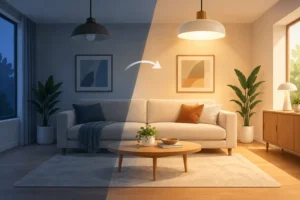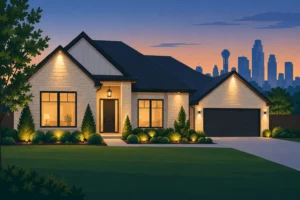

A home should not disappear the moment the sun goes down. The right roofline lighting gives your property a polished nighttime presence for holidays, game days, birthdays, backyard parties, and every ordinary evening in between. When weighing permanent lighting vs DIY installation, the real question is not whether both options can make lights turn on. It is whether the finished system will look intentional, perform reliably in North Texas weather, and still earn its place on your home years from now.
A consumer kit can seem appealing from the driveway or a product page. It promises color-changing effects, app control, and a lower upfront price. But a permanent lighting system is part of your architecture. It has to follow every roofline cleanly, handle heat and storms, deliver a bright and even beam, and disappear when it is not in use. Those details are where the difference shows.
Permanent Lighting vs DIY Installation: What You Are Really Buying
DIY permanent-lighting kits generally put the homeowner in charge of nearly every decision: measuring, product selection, mounting method, power planning, controller placement, weatherproofing, programming, repairs, and warranty claims. That can work for someone who enjoys electrical projects, has a simple one-story roofline, and is comfortable accepting a few visible compromises.
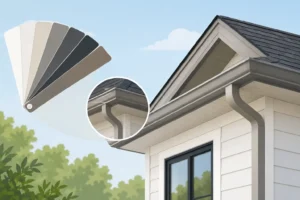
Professional installation is a custom lighting project. The system is designed around your fascia, soffits, peaks, trim color, outlets, and desired look after dark. Color-matched aluminum tracks conceal the wiring and create a straight, finished line rather than leaving individual puck lights and cords exposed beneath the eaves. The goal is simple: beautiful light when you want it, and a nearly invisible installation when you do not.
That distinction matters especially on homes with multiple gables, second-story sections, stone accents, covered patios, or complicated roof transitions. A kit is sold in fixed lengths. Your home is not built in fixed lengths. Cutting, extending, and routing a consumer system around those conditions is where many DIY projects become more expensive, more time-consuming, and less refined than expected.
The Difference You Can See From the Street
Brightness is not a minor specification. It determines whether your roofline looks crisp and celebratory from the curb or faint and uneven after sunset. Many DIY systems use lower-output LEDs and wider fixture spacing. Up close, they may look colorful. From across the street, especially on a larger home or commercial property, they can lose definition.
Luxury-grade permanent lighting is designed for visual impact. Tightly spaced, high-output RGBW LEDs create a continuous-looking wash of color along the roofline. The separate warm-white diode is equally important. RGB LEDs can create a version of white by mixing colors, but the result often has a cool, bluish, or purple cast. A true warm-white diode delivers the inviting, classic glow most homeowners want for everyday accent lighting and Christmas displays.
Beam quality also changes the appearance of the house. Properly placed fixtures should cast an even pattern down the facade without harsh hot spots, dark gaps, or lights aimed awkwardly toward windows. A professional installer considers the mounting depth, roof pitch, soffit shape, and distance between each fixture. That planning is why one home looks like it has a custom architectural lighting system while another looks like it has a strip of gadgets under the gutter.
For businesses, the visibility gap is even more noticeable. A restaurant, retail storefront, or local office needs lighting that supports its identity after hours. Dim, inconsistent points of color rarely deliver that effect. Bright, clean roofline illumination helps a property remain recognizable, festive, and inviting from the road.
Installation Is Where Long-Term Reliability Is Won or Lost
Mounting lights under an eave may sound straightforward until the work involves ladders, roof edges, electrical connections, long cable runs, and changing elevations. North Texas adds its own demands: intense summer heat, wind-driven rain, hail, sudden temperature shifts, and seasonal debris. An installation has to be built for all of it.
DIY kits often rely on adhesive, clips, exposed wiring, and homeowner-made connections. Those components may be adequate for a temporary project, but permanent exterior use exposes every weak point. Adhesive can fail in heat. A loose wire can sag. A poorly sealed connection can create intermittent outages that are difficult to trace. If a controller or power supply is undersized, sections may dim, flicker, or stop responding altogether.
Professional systems use purpose-built tracks, concealed wiring paths, code-conscious components, and planned power distribution. High-voltage electrical efficiency can reduce the number of bulky power supplies and make longer, cleaner runs possible. The installer also considers where equipment can be accessed later without disrupting the appearance of the home.
That is not just a workmanship issue. It is a safety issue. Exterior electrical work deserves more care than “it powered on during the test.” Proper connections, protected components, appropriate circuit planning, and a clean installation help protect your home while avoiding the frustration of climbing back up a ladder to troubleshoot a section that went dark.
The hidden cost of doing it twice
A DIY project may cost less on day one, but the value calculation changes when you add specialty tools, extensions, replacement parts, wasted cut lengths, and the time required to install and troubleshoot the system. If the finished result has exposed cords, uneven spacing, or poor white light, the original savings can feel small every time you pull into the driveway.
There is also the question of removal and replacement. A temporary-looking system often becomes exactly that. A professionally designed system is intended to remain part of the property, eliminating the annual cycle of hanging holiday lights, taking them down, untangling cords, and finding storage space.
App Control Is Better When the System Behind It Is Better
Both DIY and professional systems may offer phone-based control, scheduling, and color scenes. That feature alone does not make the two options equal. An app is only as enjoyable as the hardware it controls.
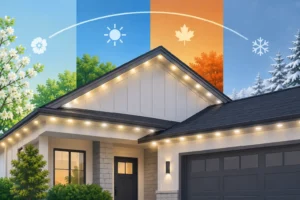
With a quality permanent system, your favorite scenes are ready when the occasion arrives: warm white for a quiet evening, red and green for Christmas, orange for Halloween, school colors for a graduation, team colors for game day, or a lively pattern for a birthday. Timers can turn the display on at dusk and off at bedtime without another trip outside.
The best experience is not endless programming. It is having a properly installed, dependable system that makes those choices effortless. Starry Night Lights helps customers understand the app, set up scenes, and get comfortable using their lighting after installation, rather than leaving them alone with a box, a QR code, and a ladder.
Warranty and Support Are Part of the Product
A permanent lighting purchase should come with a clear answer to a basic question: who helps if something goes wrong next year?
With consumer DIY products, support may mean online articles, a call center, a shipped replacement part, or a warranty process that covers a component but not the labor required to reach it. Homeowners still have to diagnose the issue, work at roof height, and restore the system themselves. National brands may have broad marketing reach, but that does not guarantee a local professional who knows your installation.
A contractor-led system carries a different expectation. The installer has seen the property, understands the layout, and has a direct stake in how the work performs. Long-term protection, domestic product support, and post-installation service matter because permanent lighting should not become a permanent homeowner maintenance project.
When DIY Can Make Sense
DIY is not automatically the wrong choice. It can make sense for a small, accessible one-story project, a short-term decorative goal, or a homeowner who genuinely enjoys exterior electrical work and accepts a less customized finish. It may also be reasonable when budget is the only deciding factor and the lighting is not expected to serve as a long-term architectural feature.
But if you want your home to be the best-looking house on the block without visible wires, pale color output, seasonal ladder work, or uncertainty about who will service the system, professional installation is the better fit. The same is true for commercial properties where appearance, reliability, and after-hours visibility affect how customers experience the business.
A good next step is to stand across the street from your property at dusk and picture the result you actually want. If that picture includes clean lines, rich color, true warm white, and one-button celebrations for years ahead, choose a system and an installer built to deliver that standard.