A lot of homeowners love the idea of permanent lighting. The colors, the convenience, the fact that you never have to drag a ladder out of the garage every December. That part is easy.
What people usually want to know next is how permanent lighting is actually installed?
Fair question. Because while permanent roof lighting looks simple once it’s up, the installation process is a lot more precise than clipping on a few seasonal strands and calling it a day. A professionally installed system is designed to look clean during the day, perform reliably at night, and hold up over time in the Texas weather.
For homeowners in Forney, TX and surrounding areas, that installation quality is a big part of what makes the upgrade worth it.
Permanent Lighting Installation Starts With the Home Itself
No two homes are exactly alike, and that matters a lot with outdoor lighting installation.
Before anything goes up, the installer needs to evaluate the layout of the home – rooflines, peaks, trim details, power access, and the overall look the homeowner wants. A single-story home with a simple front elevation is a very different project from a two-story house with multiple gables, dormers, and long roofline runs.
That’s why permanent roof lighting is typically custom-fit instead of treated like an off-the-shelf product. The goal is not just to get lights on the house. It’s to install them in a way that complements the architecture and doesn’t look obvious when the lights are off.
Measuring and Planning the Layout
Once the home is evaluated, the next step is mapping out where the lighting will go.
For most permanent lights on a house, that means measuring the roofline and identifying the architectural areas that will give the best visual result. Depending on the home, that could include front-facing rooflines, entry points, peaks, garage lines, or even additional exterior features that deserve a little extra emphasis.
This planning stage matters more than people think. Too sparse, and the effect can look uneven. Too crowded, and it can feel overdone. A good outdoor lighting installation should look seamless – clean lines, balanced placement, and a finished look that feels like it belongs on the home.
Mounting the Tracks and Hardware
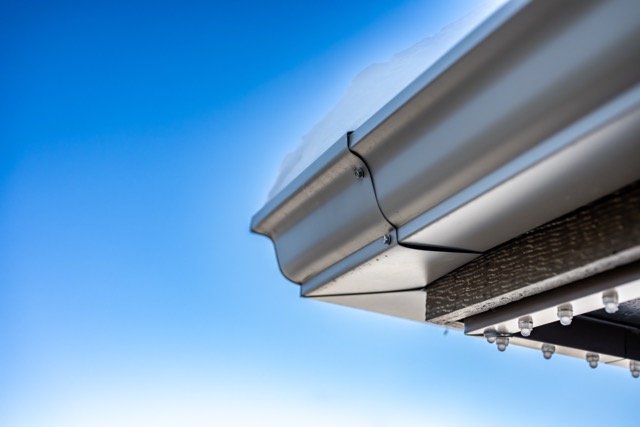
Rather than hanging temporary strands with plastic clips, professional permanent roof lighting systems are usually installed using custom tracks or channels that are secured directly to the structure of the home.
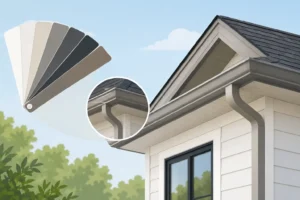
Starry Night Lights systems use precision-cut aluminum tracks that are mechanically secured, color-matched to the home, and designed for a discreet appearance.
When permanent lights are installed correctly, the system should blend into the home during the day instead of drawing attention to itself. You want people noticing the effect at night, not the hardware in broad daylight.
Installing the Lights and Connecting the System
Once the track system is in place, the lighting components are installed and connected.
This part of the outdoor lighting installation process involves placing the LEDs into the mounted system, connecting the runs properly, and making sure the layout works as intended across the home’s exterior.
On premium systems, the lights are spaced and positioned to create a smooth wash of color rather than scattered dots or uneven brightness. Features like app control, smart home compatibility, and customizable themes also mean the installation has to support the system behind the scenes, not just the lights themselves.
In other words, it isn’t just throwing lights on a rooftop. It’s about building a connected system that functions the way homeowners expect it to.
Wiring, Power, and Control Setup
After the lights themselves are in place, the electrical side of the installation gets dialed in.
That includes routing power properly, securing connections, and setting up the control system so the homeowner can manage everything from an app or connected smart device.
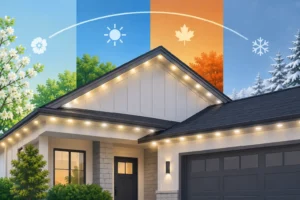
With features like scheduling, color changes, custom themes, and smart home integration through Siri, Alexa, and Google Home, the installation has to support both the lighting and the tech behind it.
This is one of the biggest differences between permanent roof lighting and traditional holiday lights. Rather than manually hanging lights for every separate occasion, you’re installing a long-term lighting setup designed for convenience, customization, and everyday use.
Testing the Lights and Fine-Tuning the Look
Before the job is finished, the full system should be tested.
That means checking the color output, confirming all sections are working correctly, making sure the app or control features are synced, and looking at the lighting effect on the home at night. This is where installers can fine-tune the final presentation and make sure the finished result looks smooth, balanced, and polished.
Why Professional Installation Matters
Permanent lights on a house are meant to stay there year-round, so the installation quality matters far more than it does with temporary lighting. A professional install can help ensure:
- the lights follow the home’s lines cleanly
- the tracks and hardware are secured properly
- the daytime appearance stays discreet
- the electrical setup is dependable
- the system performs the way it should over time
A quality permanent lighting system should be installed with precision, built from durable materials, and finished in a way that feels integrated into the home rather than attached as an afterthought.
That’s the difference people tend to notice, even if they can’t always explain it. One home looks custom. Another looks like someone improvised on a Saturday afternoon.
How Long Does Permanent Lighting Installation Take?
That depends on the size and complexity of the house.
A smaller home with a straightforward front roofline will usually be a simpler project than a larger property with multiple elevations, roof features, and longer lighting runs. The final timeline can vary based on layout, access, and design goals, but the bigger point is that permanent roof lighting is not a one-size-fits-all installation.
What Homeowners in Forney and Nearby Areas Should Expect
For homeowners in Forney, Rockwall, Heath, Sunnyvale, Mesquite, Royse City, Fate, Dallas, and nearby North Texas communities, permanent lighting installation should be seen as a professional home improvement project (not a seasonal add-on).
That’s what makes permanent lights on a house feel like more than just holiday decor. They become part of the home.
Looking for Permanent Roof Lighting in Forney, TX?
At its core, permanent lighting installation comes down to a clean, well-planned setup that’s built to last. That means careful layout planning, secure mounting, proper wiring, and a finished look that blends in with the home.
For homeowners in Forney and surrounding North Texas communities, permanent roof lighting offers a way to make the home look sharper, cut out the hassle of seasonal decorating, and enjoy flexible lighting all year long.
Starry Night Lights installs permanent architectural and holiday lighting systems designed for long-term performance, easy control, and a polished final look.