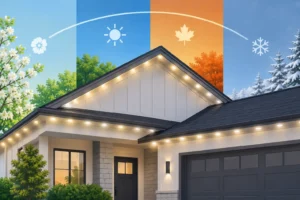
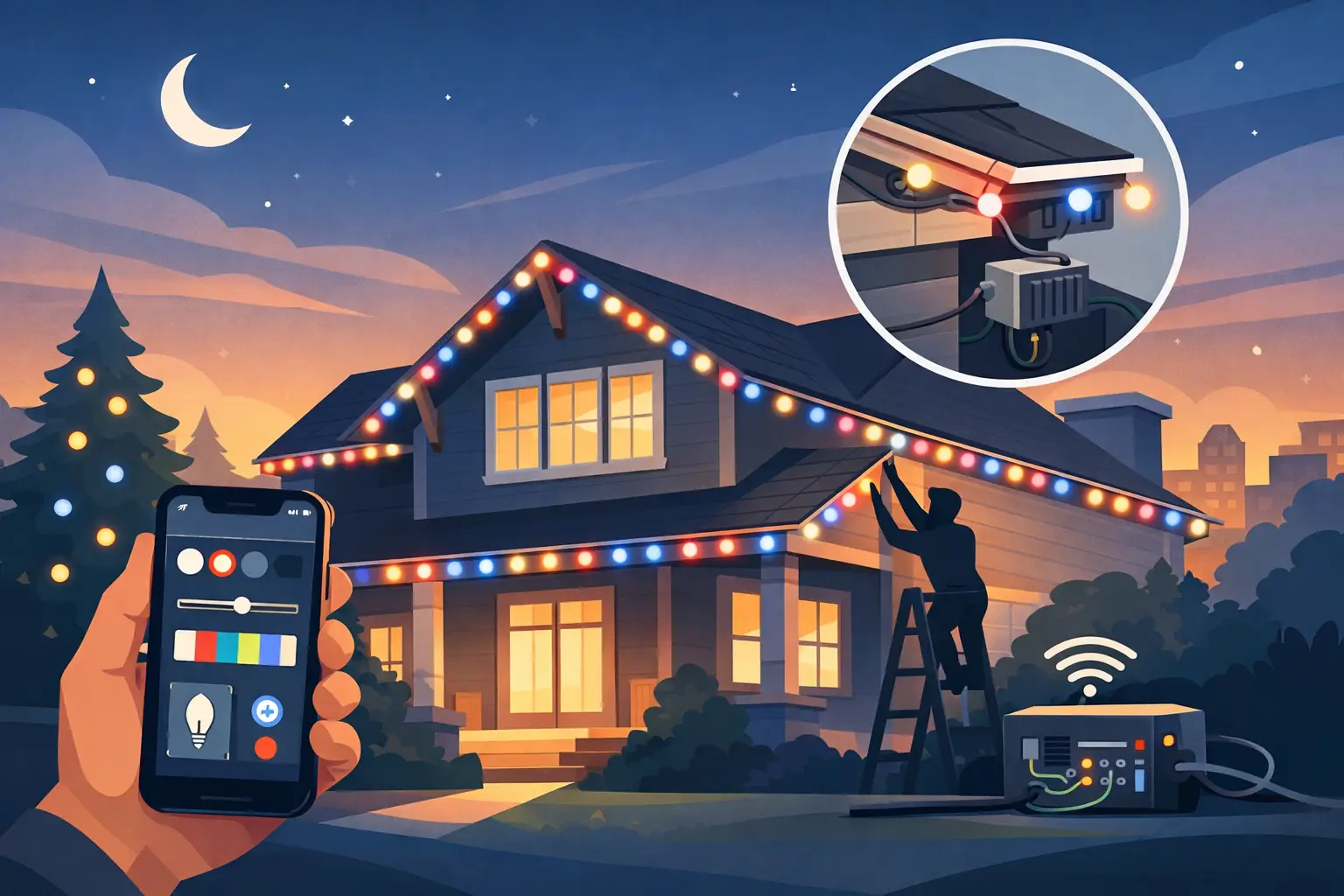
The house that looks festive on December 1 should not have to look like a construction project on November 30. No tangled strands, no climbing a ladder in cold weather, and no plastic bins taking over the garage. So, how do permanent holiday lights work? A professionally installed system places high-output LED fixtures along your roofline in a low-profile track, then lets you control colors, schedules, and scenes from an app all year long.
For North Texas homeowners and businesses, permanent lighting is more than a Christmas upgrade. It is a polished architectural feature that can shift from warm white evening lighting to red, white, and blue for Independence Day, team colors on game day, or a bright birthday display with a few taps.
How Do Permanent Holiday Lights Work Behind the Scenes?
A permanent holiday lighting system has four main parts: the LEDs, a mounting track, concealed wiring, and a controller. Each part affects how the finished installation looks, performs, and holds up over time.
The visible fixtures are individual LED modules installed at precise intervals along the eaves and roofline. On a premium system, the lights sit inside color-matched aluminum tracks that blend into the soffit or fascia. During daylight hours, the goal is simple: people should notice your home, not the lighting hardware. At night, those same discreet fixtures create a crisp, even wash of color across the architecture.
Wiring runs through the track and is routed cleanly to a controller and power source. Rather than plugging a dozen separate retail light strings into exterior outlets, the system is designed as one integrated installation. A professional contractor plans power runs, connections, and controller placement around the actual shape of your home or commercial property.
The controller is the command center. It connects the lights to a phone app, allowing the owner to choose colors, build patterns, set timers, and save favorite scenes. You might schedule soft warm white lighting from sunset to bedtime, then automatically switch to a holiday scene for a special weekend. The technology is sophisticated, but daily use should feel as easy as choosing a playlist.
Why RGBW LEDs Make a Noticeable Difference
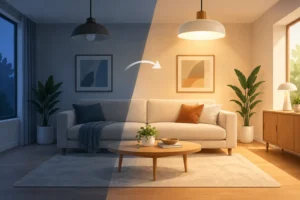
Not all permanent lights produce the same result. Many lower-cost systems use RGB LEDs, which combine red, green, and blue light to make various colors. They can produce fun holiday effects, but their attempt at white often looks bluish, pale, or slightly purple.
Luxury-grade RGBW lighting adds a dedicated warm-white diode. That separate diode matters because warm white is the color homeowners use most often outside the holiday season. It creates the inviting glow associated with upscale landscape and architectural lighting, rather than the cool, synthetic white common in bargain LED products.
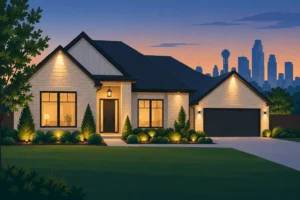
Brightness also matters. A system may technically display hundreds of colors, but if the LEDs are underpowered or spaced too far apart, the roofline can look dim, dotted, or uneven from the street. Higher-output fixtures with thoughtful spacing create a more continuous, deliberate presentation. That is the difference between a few colored points under the eaves and a home that becomes the best-looking house on the block after dark.
For businesses, output and color quality are even more important. A restaurant, retail storefront, or highly visible office needs lighting that reads clearly from the road without looking harsh. The right design supports brand colors, seasonal promotions, and community celebrations while still looking professional on an ordinary Tuesday night.
The Track Is What Makes Permanent Lights Look Built In
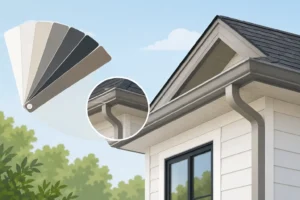
Traditional holiday lights hang from clips. Permanent holiday lights are installed in a purpose-built track that follows the architecture. The track provides a clean mounting surface, protects the wiring, and keeps every fixture aligned at the same angle.
That angle is not an afterthought. Light placement determines whether the roofline has a smooth glow or whether each LED shoots a distracting point of light into the yard. A qualified installer considers soffit depth, roof pitch, trim color, gutters, peaks, and sightlines from the street before deciding where the track belongs.
Color-matched aluminum tracks are especially valuable in Texas weather. Plastic components can fade, become brittle, or look out of place against quality exterior finishes. Aluminum creates a cleaner architectural fit and is designed for the long haul. The installation should look custom because it is custom – measured, cut, and fitted for your property rather than pulled from a universal box.
Power, Controls, and Safety Are Not DIY Details
Permanent lighting works reliably when the electrical design is right. The system needs properly planned power delivery so lights remain bright and consistent across long rooflines. Voltage, wire routing, connection quality, weather protection, and load management all affect performance.
This is one reason professionally installed systems stand apart from DIY kits. Consumer products often rely on lower-output components, exposed connections, widely spaced bulbs, and limited support when something fails. A premium installation uses code-compliant components and is designed around the property, not around the limitations of a prepackaged strand.
It also pays to ask what happens after installation. A permanent system is an exterior electrical product expected to work through intense sun, wind, rain, freezing nights, and summer heat. Long-term protection, domestic product support, and responsive local service carry real value. The lowest upfront price is rarely the best value if the fixtures fade, a controller becomes unsupported, or a roofline needs to be reworked later.
At Starry Night Lights, the focus is on a contractor-led installation that includes the design, professional mounting, app setup, and support needed to make the system feel finished from day one.
What Can You Do With Permanent Holiday Lighting?
Christmas is the obvious answer, but it is only the beginning. Permanent LEDs let you use your roofline whenever the occasion calls for a little more presence. Homeowners often keep warm white lighting on for everyday curb appeal, then change scenes for birthdays, graduations, Halloween, patriotic holidays, and family gatherings.
For sports fans, a saved team-color scene turns game day into an event before guests even walk through the door. For families, a favorite holiday pattern can return every year without reinstalling a single strand. And when travel or a busy work schedule gets in the way, scheduling keeps the house looking cared for without requiring anyone to be home.
Commercial properties gain a practical visibility tool. A storefront can highlight a holiday sale, participate in a local event, or reinforce recognizable brand colors after sunset. The key is restraint. Animated effects are great for celebrations, but a refined warm-white scene often does more for everyday professionalism.
What Determines Whether a System Is Worth It?
Permanent holiday lights are an investment in appearance, convenience, and reduced seasonal hassle. Whether they are worth it depends on how often you decorate, how much you value a clean exterior finish, and whether you want a system built to remain in place for decades.
A basic DIY option may make sense for someone who enjoys installing lights, has a simple single-story roofline, and only wants a temporary display once a year. But it comes with trade-offs: ladder time, storage, replacement strands, inconsistent color, and visible cords or clips.
A custom permanent system makes more sense when you want one solution for holidays, celebrations, security-minded nighttime presence, and daily curb appeal. Look beyond the color menu when comparing proposals. Ask about LED brightness, fixture spacing, dedicated warm-white diodes, track material, electrical design, weather-rated construction, warranty coverage, and who will answer the phone if you need help later.
The best permanent lighting does not feel like Christmas lights left up all year. It feels like your property was designed to look exceptional after sunset – and whenever there is something worth celebrating, the color is already waiting.