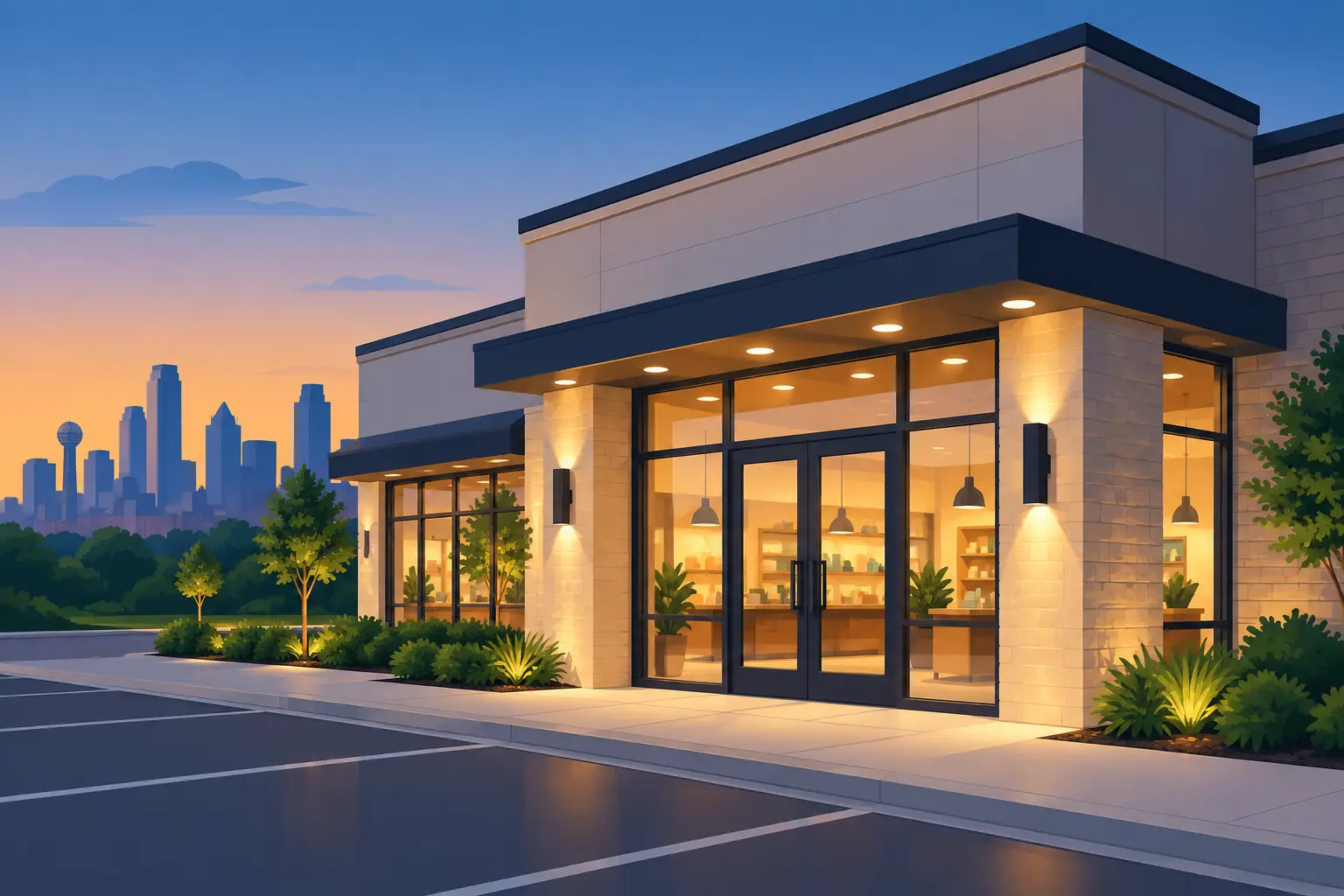
A dark storefront can make a great business look closed, even when the parking lot is full. This commercial storefront lighting guide is built for North Texas owners who want their property to stay visible, polished, and on-brand long after sunset – without relying on temporary lights, tangled extension cords, or a seasonal installation scramble.
For restaurants, retail centers, gyms, offices, entertainment venues, and locally recognized brands, exterior lighting is not just decoration. It is part of the customer experience. The right system helps guests find the entrance, reinforces your identity, creates a safer-looking property, and gives you a fast way to participate in holidays, sporting events, community celebrations, and promotions.
Start With What Your Storefront Needs to Do
Commercial lighting should earn its place on the building. Before choosing colors, fixtures, or control options, consider what customers need to see from the street and what you want them to feel when they arrive.
A neighborhood restaurant may want a warm white roofline that makes the patio and entrance feel inviting every night, with the option to switch to school colors on game days. A retail storefront may need brighter architectural definition so it remains recognizable from a busy roadway. A multi-tenant commercial property may need clean, consistent illumination that presents the entire center as well cared for without competing with tenant signage.
The best plan depends on your building height, roofline shape, setback from the road, nearby streetlights, signage, operating hours, and municipal or landlord requirements. A system that looks impressive on a one-story boutique can disappear on a large warehouse-style façade if the output, spacing, and beam direction are wrong.
Choose Permanent LEDs Over Temporary Seasonal Lighting
Temporary commercial lighting has a place for one-off events, but it creates the same annual problems: installation scheduling, storage, damaged strands, visible cords, ladders, and a look that can vary from year to year. Permanent architectural LED lighting gives your business a finished appearance every night while keeping seasonal color available when you want it.
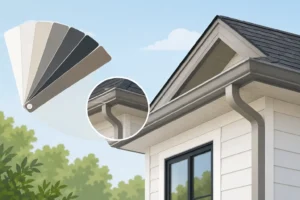
A professionally installed system is mounted in color-matched aluminum track, with wiring concealed along the structure. When the lights are off, the installation should blend into the roofline rather than look like a row of exposed holiday bulbs. When activated, it should produce clean, evenly spaced points of light that frame the architecture instead of creating scattered hot spots.
That distinction matters for commercial properties. Customers may forgive a messy light display at a backyard party. They are less likely to see it as polished or trustworthy on a business they are deciding whether to visit.
Brightness Is More Than a Spec Sheet Number
Brightness should be selected for the site, not based on the lowest-cost fixture package. Underpowered LEDs can look acceptable in a product photo but wash out against streetlights, parking-lot lighting, illuminated signs, or a large brick façade. The result is a system you paid to install but rarely notice from the road.
High-output LEDs give a commercial roofline enough presence to define the building at night. Yet more brightness is not always better. Excessive output can create glare, distract from signage, or look harsh on a smaller storefront. Proper placement and programming let the system feel intentional: brighter where visibility matters and softer where warmth matters more.
Ask how closely fixtures are spaced and how the manufacturer manages beam quality. Tightly spaced lights generally produce a more continuous, upscale architectural effect. Wide spacing can leave dark gaps and make a roofline appear dotted rather than finished.
Why Dedicated Warm White Matters
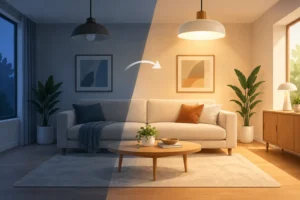
RGB lights can mix red, green, and blue to imitate white, but that often produces a cool, bluish cast. For a business using white as its everyday setting, that compromise shows.
Premium RGBW fixtures include a separate warm-white diode. This gives restaurants, boutiques, professional offices, and customer-facing properties a true warm white that feels elegant rather than clinical. You still have full color for holiday scenes and events, but your most frequently used setting looks like architectural lighting, not a novelty display.
Use Color With a Clear Purpose
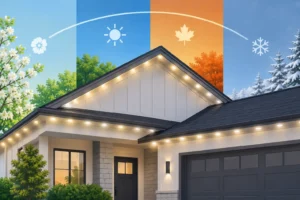
The excitement of app-controlled lighting is real. One evening your building can glow warm white; the next, it can show team colors for a local rivalry, red and pink for Valentine’s Day, or patriotic colors for a community event. But commercial color works best when it supports a message.
Create a small library of scenes that match your calendar and brand. Use warm white for standard evenings, brand colors for special promotions, and holiday scenes that fit the season without overpowering your sign or façade. A tasteful pattern can create energy, but constant rapid motion may feel distracting for a law office, medical practice, or upscale retailer.
For bars, entertainment venues, and family attractions, more animated effects may make sense. For other businesses, restrained color usually delivers the more premium impression. The right choice depends on your customers and the personality of the location.
Installation Quality Protects the Building and the Investment
Commercial exterior lighting is only as dependable as the installation behind it. Clean wiring routes, weather-rated connections, secure mounting, appropriate power distribution, and code-compliant components are not details to skip. They determine whether the system continues to perform through Texas heat, high winds, rain, and repeated seasonal use.
Do not settle for a system installed with exposed cords, makeshift fasteners, or fixtures that are not designed for a permanent exterior application. Those shortcuts can hurt curb appeal immediately and create service headaches later.
A contractor-led design also prevents avoidable visual mistakes. The installer can account for roofline angles, fascia material, gutters, architectural breaks, sign locations, and power access before a single track is mounted. That planning is especially valuable on commercial properties, where one uneven section is visible to every customer approaching the building.
Voltage, Controls, and Long-Term Reliability
Ask practical questions about electrical design. Higher-voltage systems can improve efficiency and maintain consistent performance over longer runs when engineered correctly. Quality controllers should be housed and installed for the environment, with programming that remains easy for your staff to use.
The control experience should not require an employee to understand electrical components or complex programming. A good app allows authorized users to select scenes, schedule operating hours, adjust brightness, and turn the system off after closing. Automation keeps your storefront consistent while reducing the chance that lights are left on unnecessarily overnight.
It is also worth asking who supports the product after installation. Commercial owners need a local contractor who can answer questions, make adjustments, and stand behind the work. A long protection proposition is meaningful only when there is a responsive team behind it.
Plan for Everyday Use, Not Just December
Holiday lighting may be what first gets your attention, but year-round usefulness is what makes permanent storefront lighting a smart property upgrade. Think about the full calendar: grand openings, customer appreciation events, local school spirit, awareness months, game nights, private events, and seasonal promotions.
A permanent system lets you respond in minutes instead of calling for an installation crew each time an opportunity appears. It also eliminates the annual ladder work and storage burden that comes with temporary commercial displays. Your building stays ready without looking like it is permanently decorated for a single holiday.
Starry Night Lights designs commercial systems around that balance: luxury-grade everyday architectural lighting with the flexibility to celebrate whenever your business has a reason.
Questions to Ask Before You Approve a Proposal
A lighting proposal should explain more than the total price. Ask whether the quote includes high-output RGBW fixtures, true warm-white diodes, fixture spacing, concealed wiring, color-matched track, app controls, programming assistance, warranty coverage, and post-installation service.
Also ask what the system will look like during the day. The strongest permanent lighting installations disappear into the architecture when switched off. If the daytime appearance is an afterthought, the building may trade one problem for another.
Finally, consider the contractor’s design process. A careful provider will look at your property from the customer’s approach, not only from the roofline. That means considering sightlines from the street, the main entrance, parking areas, neighboring buildings, and your existing signage.
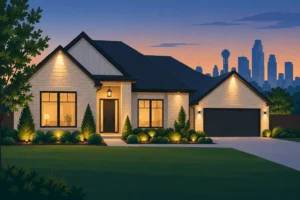
A well-lit storefront sends a simple message before anyone opens the door: this business is open, cared for, and ready to welcome people. Choose a system built to make that message look right on an ordinary Tuesday night, not only during the holidays.