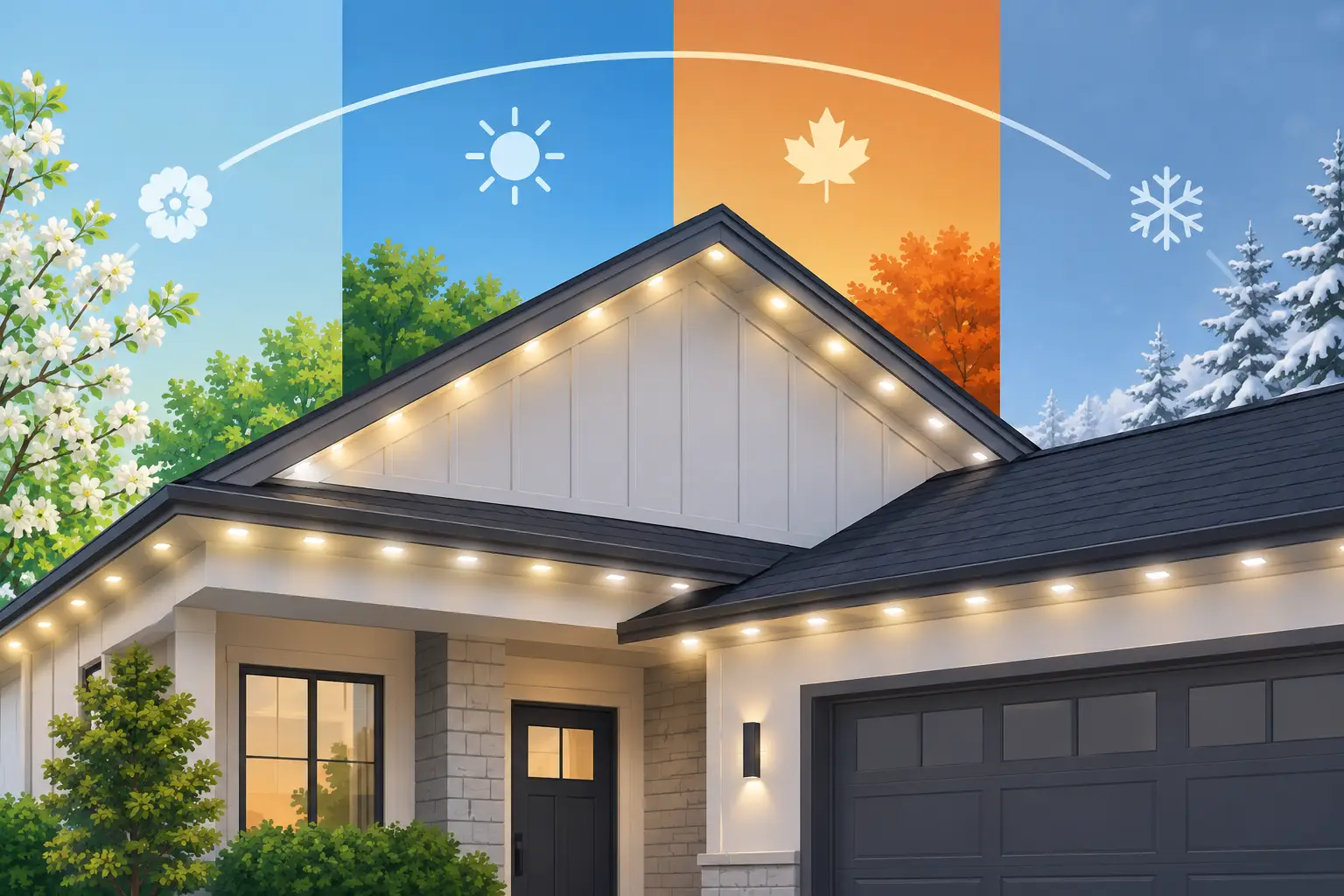
The best holiday lighting moment is not the one spent balancing on a ladder in December. It is opening an app, selecting a warm white scene for a dinner party or a red-and-green Christmas display, and seeing your home light up exactly as planned. So, do roofline LEDs stay installed year-round? With a true permanent lighting system, yes. The lights, tracks, wiring, and controller are designed to remain in place through every season – not installed for a few weeks and removed when the decorations come down.
That distinction matters. Permanent roofline LEDs are an architectural lighting upgrade, not a strand of temporary Christmas lights left outside. A professional system should look refined in daylight, perform brilliantly after dark, and handle the heat, storms, wind, and temperature swings North Texas delivers.
Do Roofline LEDs Stay Installed All Year?
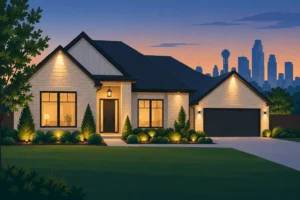
Professionally installed roofline LEDs remain mounted year-round, usually in color-matched aluminum tracks positioned beneath the fascia or soffit line. From the street, the goal is for the hardware to disappear during the day. At night, the individual lights produce clean, consistent washes of color or warm white along the roofline.
The permanent installation is what eliminates the annual cycle of climbing, clipping, untangling, replacing failed strands, and finding storage space. Your system stays ready for Christmas, Halloween, Independence Day, game days, birthdays, backyard events, and ordinary evenings when you simply want the house to look exceptional.
Not every product marketed as “permanent” earns that description. Some lower-cost systems use exposed wire runs, widely spaced lights, adhesive mounting, or plastic components that can look improvised from the curb. They may be fine for a short-term project, but they do not deliver the finished appearance or long-term confidence property-proud homeowners expect.
What Keeps Permanent Roofline Lighting in Place?
A permanent system depends on the installation method as much as the LEDs themselves. Quality components help, but installation details determine whether a lighting system looks intentional for years or begins to sag, shift, fade, or create visible clutter.
Custom-fitted aluminum tracks
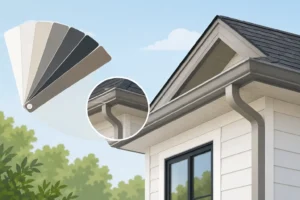
The track is the foundation of the system. Professional-grade aluminum channels are cut and fitted to the architecture of each home or commercial building, then mounted securely along the roofline. Color-matching the track to the fascia, trim, or soffit makes a significant difference in daylight. The system should complement the property, not announce itself with a visible strip of hardware.
Aluminum also gives the installation a more stable, polished base than temporary clips or loose cable. Properly positioned tracks hold fixtures at a consistent angle and spacing, helping the lighting look even across long rooflines, peaks, dormers, and entryways.
Concealed wiring and protected connections
A premium permanent lighting installation does not leave a web of wire draped across the exterior. Wiring should be planned around the structure, routed cleanly, and protected where it transitions between roof sections. Connections need weather-resistant construction and thoughtful placement, because every connection is a point that must withstand years of outdoor exposure.
This is one reason professional design is worth considering. Homes are rarely simple rectangles. Eaves change height, gables interrupt runs, stone and brick create mounting challenges, and power must be supplied safely without creating an eyesore. A contractor accounts for those details before installation begins.
Proper fastening, not shortcuts
Roofline lighting should be mechanically secured with methods appropriate for the building materials and the system being installed. Adhesive alone is not the answer for a permanent exterior installation exposed to summer heat and severe weather. The right fasteners, spacing, channel placement, and wire management protect both the lighting investment and the exterior finish.
A professional installer also avoids compromising roofing materials or forcing components where they do not belong. The objective is secure, code-conscious work that respects the home, not a quick install that creates future repair concerns.
North Texas Weather Is the Real Test
North Texas asks more of outdoor lighting than a mild-weather climate. Summer heat can punish plastics, adhesives, and poorly protected electronics. Thunderstorms bring wind-driven rain. Hail, dust, and sudden temperature changes all test the quality of the enclosure, wiring, mounting system, and electrical design.
That does not mean permanent lighting is maintenance-free forever. It means the system should be engineered for the environment it will live in. High-quality LEDs, durable tracks, weather-rated components, and protected power connections give the installation a far better chance of performing as intended over the long haul.
Brightness also matters in Texas. Dim, widely spaced color LEDs can disappear against a large brick home or commercial facade. High-output RGBW fixtures with tightly controlled spacing create cleaner roofline definition and better visibility from the street. Separate warm-white diodes are especially valuable because they produce a more natural, welcoming white than a mixed-color approximation.
Permanent Does Not Mean You Never Need Support
The right question is not whether a roofline LED system will ever need attention. Any exterior electrical product can eventually need service. The better question is whether the company that installed it can support the system years after the original installation.
Choose a contractor that can explain what is covered, how service requests are handled, and whether replacement parts and technical help are available domestically. Warranty language should be clear, not buried behind vague promises. A long protection proposition only has value if there is a responsive local team prepared to stand behind the installation.
At Starry Night Lights, the approach is to design permanent lighting as a long-term part of the property, with custom installation, app setup, and ongoing support included in the experience. That matters when you want a scene adjusted, a controller question answered, or a component evaluated after a major storm.
When Roofline LEDs May Not Be the Right Fit
Permanent roofline lighting is a premium investment, and it is not automatically the best choice for every property. If you are planning to replace fascia, soffits, gutters, roofing, or exterior siding soon, it may be smarter to coordinate the lighting installation after that work is complete. This prevents unnecessary removal and reinstallation.
It is also worth discussing access and electrical capacity during the estimate. Older homes may need electrical improvements, and very complex rooflines require more planning than a single-story ranch home. Those are not reasons to settle for a lesser system. They are reasons to work with a contractor who designs the installation around the property instead of selling a one-size-fits-all kit.
For businesses, the calculation includes visibility and brand presentation. A restaurant, retail storefront, church, or community-facing office can use permanent lighting for holiday campaigns, team colors, grand openings, and everyday after-hours recognition. But commercial projects may require additional planning around height, power, local requirements, and operating schedules.
What You Can Expect Once They Are Installed
Once the tracks and LEDs are in place, the visible experience is simple. You control colors, patterns, schedules, and holiday scenes through an app. One evening, your home can have understated warm-white architectural lighting. The next, it can celebrate a graduation, birthday, playoff game, or holiday with coordinated color.
The difference between a luxury-grade system and a basic color-changing product shows up in the details: consistent brightness, smooth color transitions, crisp roofline coverage, clean warm white, and hardware that does not distract from the architecture. You are not buying lights for one holiday. You are investing in a property feature that earns its place throughout the year.
Before choosing a system, stand across the street from your home at dusk and imagine the result you want. If you want the best-looking house on the block without the annual ladder routine, permanent roofline LEDs should remain installed – but only after they have been designed and fitted to look like they were always meant to be there.