A business can have excellent signage, a clean storefront, and a strong reputation, then disappear the moment the sun goes down. The right commercial lighting options keep your building visible, reinforce your brand, and give customers a reason to notice your location after hours. For North Texas restaurants, retailers, offices, event venues, and locally recognized storefronts, exterior lighting is not an afterthought. It is part of the customer experience.
Permanent architectural LED lighting has changed what commercial properties can do. Instead of climbing ladders every holiday season or relying on a few floodlights, business owners can use one professionally installed system for everyday warm-white curb appeal, team colors, grand openings, holidays, community events, and added nighttime presence.
Commercial Lighting Options for Better Visibility
Not every lighting solution serves the same purpose. A parking lot needs safe, functional illumination. Sign lighting needs to make a message readable. Architectural lighting needs to shape how people see the building itself. The strongest commercial properties use each type intentionally rather than expecting one fixture to do every job.
Permanent roofline lighting
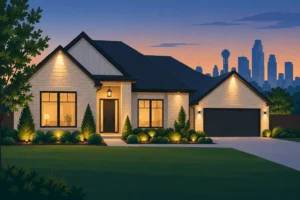
For businesses that want a polished, recognizable look year-round, permanent roofline LEDs are often the best fit. The fixtures are installed in color-matched aluminum tracks along the roofline, with wiring concealed for a finished appearance during the day. At night, they provide a clean wash of light across the fascia, eaves, and architectural lines that make your property distinct.
This is not the same as hanging temporary strands across a building. A commercial-grade permanent system is designed around the building’s layout, electrical needs, and viewing distance. Tightly spaced LEDs create a continuous, high-end effect rather than a dotted line of widely separated points. High-output RGBW fixtures give you both vivid color and a true dedicated warm-white setting for normal business nights.
That separate warm-white diode matters. Some lower-cost color-changing products blend red, green, and blue to approximate white, which can look cool, bluish, or uneven. A business that wants an upscale, inviting exterior should not have to choose between colorful holiday scenes and quality white light the rest of the year.
Seasonal Christmas lighting
Seasonal Christmas lighting remains a great choice for businesses that only need a short-term display or want a large, traditional holiday presentation. It can create excitement around a restaurant patio, shopping center, office entry, or retail storefront during the busiest gift-buying season.
The trade-off is labor and repetition. Temporary lights need to be installed, maintained, removed, packed away, and installed again the following year. For a property manager or business owner, that means scheduling around weather, protecting staff from ladder work, and hoping the display still looks professional after weeks of wind and rain.
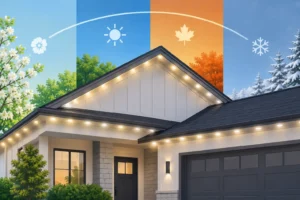
A permanent system can still deliver Christmas colors and animated scenes with a tap in the app, but it remains available for every other event on the calendar. That is where the long-term value becomes clear.
Sign, wall, and landscape lighting
Sign illumination, wall packs, gooseneck fixtures, bollards, and landscape lights all play important roles. They improve readability, guide visitors to entrances, define walkways, and add security around the property. For many commercial sites, these functional layers should work alongside roofline lighting, not replace it.
For example, a restaurant may need pathway lighting for safe patio access and a bright sign for passing traffic. Roofline lighting then adds the visual personality: warm white for a refined evening service, school colors on game night, or festive scenes for a local parade weekend. The building becomes easier to find and more memorable once customers arrive.
What Separates Premium Systems From Basic LEDs
Commercial lighting is one area where the lowest quote can become the most expensive choice. Cheap strips, consumer-grade bulbs, and loosely installed systems may look acceptable on day one. Over time, inconsistent brightness, exposed wiring, failed sections, and weak support quickly take away from the property image you were trying to improve.
A premium system should be designed for decades of outdoor use, not a few seasons. Look closely at the construction, the electrical design, and who will be available if service is ever needed.
Brightness and beam quality
Brightness is not simply about choosing the highest number on a product sheet. A fixture must be bright enough to remain visible from the street without producing harsh glare or uneven hot spots on the building. Proper diode spacing and beam direction are just as important as raw light output.
Commercial rooflines are often viewed from farther away than residential installations. A system that looks fine on a single-story home can look dim or broken up on a wide retail façade. Professional design accounts for roof height, street distance, competing ambient light, and the color of your exterior materials.
Voltage, wiring, and code compliance
Electrical details are easy to ignore until something fails. Professionally installed commercial lighting should use code-compliant components, properly planned power distribution, protected connections, and installation methods suited to the structure. Higher-voltage system designs can deliver more efficient power over longer runs than many low-voltage alternatives, which is especially relevant on broad buildings with multiple rooflines.
Concealed wiring also protects the finished look. Customers should see a crisp line of light, not loose cables, sagging clips, or hardware competing with your architecture during daylight hours.
Controls that your team can actually use
A lighting system should make celebrations easier, not hand your staff another technical problem. App-based controls allow owners or approved team members to schedule normal warm-white lighting, select colors, build scenes, and change displays for holidays or events.
The best setup is one that is simple after installation but backed by a contractor who can help when questions arise. You may want a subtle white roofline every evening, red and green for December, purple for a school fundraiser, or a custom sequence for a grand opening. Those changes should take moments, not an electrician’s visit.
Choosing the Right System for Your Property
Start with the job your lighting needs to do. If your priority is safe navigation around a large site, functional area and pathway lighting deserve attention first. If your business relies on curb appeal, visibility, and a memorable exterior, permanent architectural roofline lighting brings the greatest daily impact. If the goal is a single holiday season, temporary installation may be enough, though it will not offer year-round flexibility.
Budget matters, but compare ownership costs rather than comparing initial prices alone. A lower-cost display that requires annual installation, replacement bulbs, storage, and repeated labor can lose its advantage quickly. A professionally installed permanent system costs more upfront because it includes custom design, quality components, clean installation, app setup, and long-term protection. It also eliminates much of the recurring seasonal work.
Architecture matters too. A straightforward one-story storefront may need a clean, minimal roofline treatment. A larger building with peaks, parapets, patios, and multiple customer entrances may benefit from a more detailed plan. More lights are not automatically better. The goal is to highlight the lines that make the property recognizable without making the building look cluttered.
Why Local Installation Makes a Difference
Commercial properties are not DIY test sites. A poor installation can affect building appearance, tenant relationships, electrical safety, and the confidence customers have in your brand. Local contractor support means the installer can evaluate the building, create a custom layout, handle the technical work, demonstrate the controls, and remain available after the project is complete.
At Starry Night Lights, that means building commercial systems around premium RGBW LEDs, tightly spaced fixtures, color-matched tracks, concealed wiring, and the dependable warm-white look businesses use most often. The result is a display that feels intentional on an ordinary Tuesday night and ready for the next big celebration when the calendar changes.
Your storefront already says something about your business before anyone walks through the door. Give it a reason to keep speaking after dark.