
A permanent lighting system should make your home look exceptional on Christmas, game day, birthdays, and every ordinary Tuesday night. But the permanent lights installation cost is not a one-size-fits-all number, especially on North Texas homes with varied rooflines, brick facades, gables, patios, and second-story peaks. The real question is not simply what you will pay. It is what your investment will look like from the street, how long it will last, and whether you will still be confident in it years from now.
For a professionally installed premium system, pricing reflects more than a string of color-changing bulbs. It covers a custom lighting design, high-output LEDs, color-matched track, concealed wiring, electrical components, expert installation, app configuration, and ongoing support. That difference becomes obvious after dark.
What Does Permanent Lights Installation Cost?
Most professionally installed permanent lighting systems are priced by linear foot, then adjusted for the property’s architecture and installation complexity. A simple, single-story roofline with easy access will typically cost less than a home with multiple gables, steep pitches, dormers, covered patios, upper-story sections, and difficult transitions.
For North Texas homeowners, a premium permanent lighting installation often falls in the several-thousand-dollar range. Larger homes, intricate rooflines, commercial properties, and projects requiring additional power runs or specialty access can move higher. A precise quote requires seeing the property because measurements alone do not reveal every corner, soffit detail, electrical consideration, or access challenge.
That may sound broad, but broad pricing is more honest than a low advertised number that excludes the parts that determine whether the finished system looks refined or rushed. A professional quote should explain what is included, where the lights will be placed, how the wiring will be managed, and what protection comes with the installation.
Why Two Permanent Lighting Quotes Can Be Far Apart
Not all permanent lights produce the same result. A lower quote may use fewer lights per foot, weaker LEDs, plastic mounting channels, exposed wire, or RGB-only diodes that create an underwhelming white. It may also leave out design work, service support, or warranty coverage that matters once the installer has packed up.
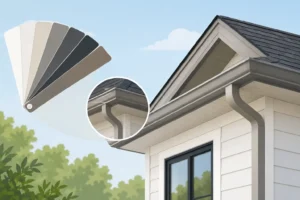
Premium systems are engineered to disappear during the day and perform after sunset. Color-matched aluminum tracks sit cleanly along the roofline. Fixtures are tightly spaced to create consistent scallops of light rather than scattered dots. Concealed wiring protects the home’s appearance and reduces exposure to weather, pests, and accidental damage.
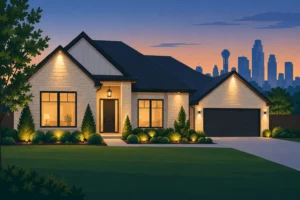
The difference is especially noticeable with white light. Many lower-grade systems use RGB LEDs to imitate white, which can look bluish, dull, or uneven. Luxury-grade RGBW lighting includes a dedicated warm-white diode, giving you the rich architectural glow homeowners want for everyday curb appeal, elegant gatherings, and Christmas displays. If you want the best looking house on the block, warm white is not a small detail.
The hardware behind the price
The quality of the lighting components directly affects the permanent lights installation cost. High-output LEDs create brighter, more defined color from the curb. Better beam control produces an intentional roofline pattern instead of a washed-out glow. Commercial-grade controllers, properly sized power supplies, and code-compliant connections provide the reliability needed for years of regular use.
High-voltage systems can also be more efficient over long roofline runs than lower-voltage alternatives. That matters on larger homes and commercial buildings, where voltage drop and dimming can become visible problems. Quality equipment costs more upfront, but it helps the final installation remain bright and consistent from the first peak to the last.
Labor is not just mounting lights
Professional installation is a major part of the investment because the work is permanent. The crew must measure the roofline, build and fit the track, make clean transitions at corners, conceal wiring, protect the exterior, and safely work around heights and roof conditions. Then the system has to be powered, programmed, tested, and handed off to the owner.
This is not seasonal light hanging with clips and extension cords. A permanent system is an architectural addition to your home. Shortcuts may save money on installation day, but exposed cables, uneven spacing, poor fastener placement, and weak electrical planning have a way of showing up later.
Property Details That Affect Your Final Quote
Linear footage is the starting point, not the full story. A long, straight front eave is efficient to install. A roofline with multiple peaks, returns, second-story elevations, and tight architectural details takes more planning and labor. The same is true for homes where the ideal lighting route requires careful work around gutters, stonework, soffit features, or existing exterior equipment.
Electrical access also affects the project. In some cases, there is a convenient protected outlet near the installation area. In others, the system may need a new outlet, a dedicated circuit, longer concealed cable runs, or a better controller location. These details should be evaluated before installation, not discovered after a crew arrives.
For commercial properties, scale and visibility add another layer. A restaurant, retail building, or branded location may need longer runs, higher installation points, and programming that supports both everyday identity and seasonal promotions. The goal is not merely to add color. It is to keep the property visible, polished, and recognizable after dark.
What a Premium Quote Should Include
When you compare permanent lighting proposals, compare the complete system rather than the headline price. Ask whether the quote includes custom-fitted track, hidden wiring, controller and power equipment, app setup, installation labor, and training. Confirm the light spacing, LED brightness, and whether the system uses dedicated white diodes.
You should also ask what happens after installation. A permanent product needs a meaningful protection plan and a contractor who can answer the phone if you need help changing settings, diagnosing an issue, or adding lighting to a future project. Domestic product support and local service are worth considering when your system is installed high on your home, not sitting in a box on a store shelf.
Starry Night Lights designs each project around the home or business rather than forcing a standard kit onto an uncommon roofline. That approach protects the visual result and gives owners a system they can actually enjoy, from subtle warm-white evenings to full-color holiday scenes controlled from an app.
The Cost of DIY and Bargain Systems
A DIY kit can look attractive because the initial purchase price is lower. For a handy homeowner with a simple roofline, plenty of time, and comfort working at height, it can be a reasonable choice. But it is not the same category as a professionally designed permanent lighting system.
DIY buyers take on measuring, ladder work, electrical routing, mounting, troubleshooting, programming, and future repairs. They also have to live with the result if the spacing is inconsistent, the wire is visible, or the color does not perform as advertised. On a tall or complex North Texas roofline, the safety and installation risk alone can outweigh the savings.
Bargain installed systems carry a different concern: the work may look fine at first but lack the component quality or workmanship to support decades of use. A low quote is not automatically a bad quote. It simply deserves better questions. Find out exactly what is being installed and what the provider will do if a section fails after the first season.
Think in Years, Not One Holiday Season
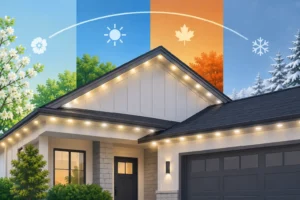
Permanent lights replace more than seasonal decorations. They replace the annual ladder climb, the tangled bins, the burned-out strands, and the pressure to get everything installed before the first holiday gathering. They also give your property value between holidays: warm white for everyday elegance, team colors for a big game, school colors for graduation, and custom scenes for birthdays, parties, and neighborhood celebrations.
Spread across a long service life, the investment can make more sense than repeatedly buying, installing, removing, and replacing temporary lights. The right system should be built for frequent use, not treated like a decoration that comes out once a year.
A thoughtful quote gives you clarity before the first track goes up. Choose the provider who can explain the materials, the design, the protection, and the finished visual effect in plain language. Your roofline is one of your property’s most visible features after dark. It deserves lighting built to look intentional every night you turn it on.