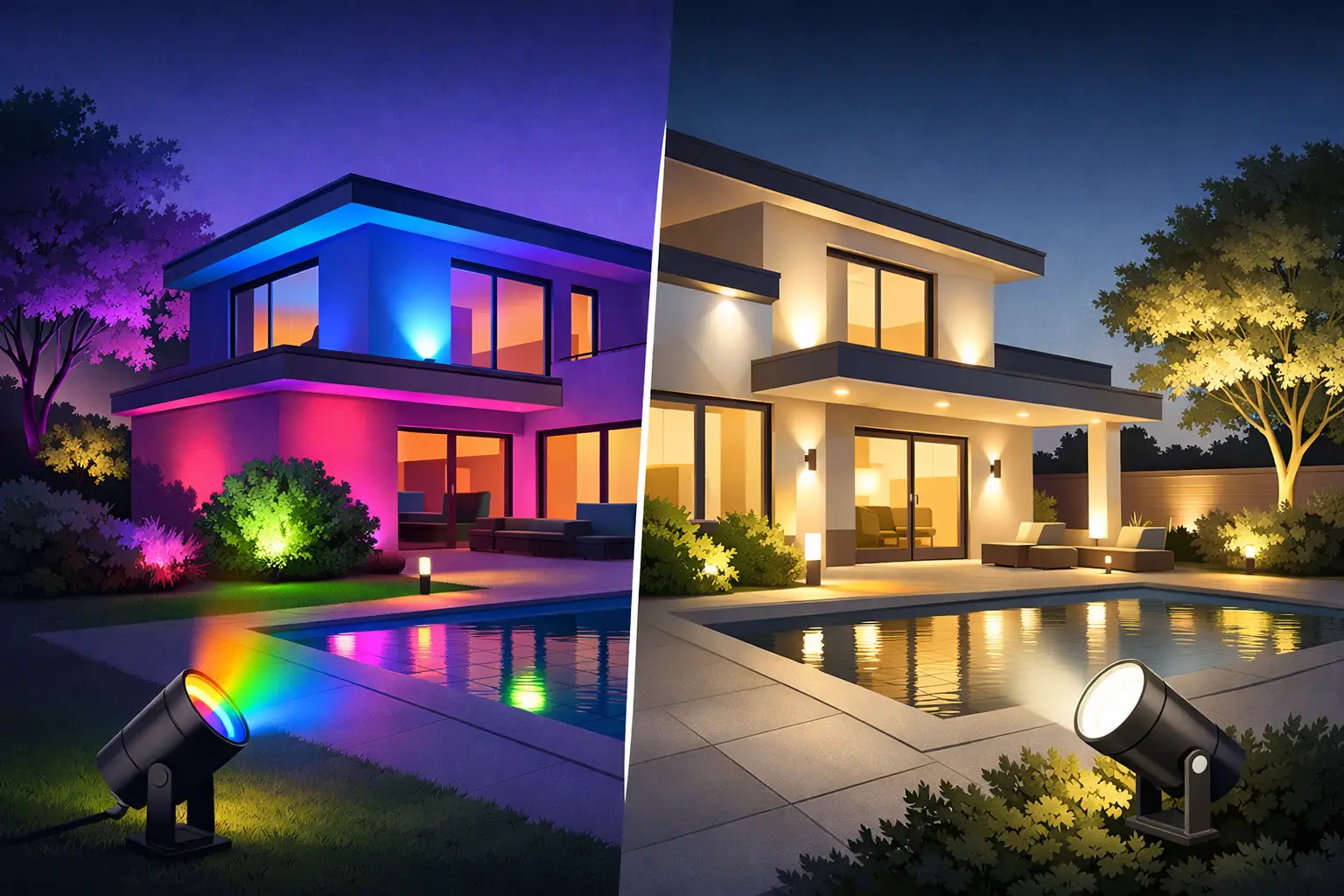
A permanent lighting system should make your home look exceptional on a Tuesday night, not just on Christmas or game day. That is the real question behind RGB vs RGBW outdoor lighting. Both systems can produce colorful holiday scenes, team colors, party effects, and animated patterns. But when you want a clean, welcoming white along the roofline for most of the year, the difference becomes impossible to ignore.
For North Texas homeowners and businesses investing in a custom-installed system, RGBW is usually the premium choice. It provides the color-changing fun people expect from permanent lighting while delivering a true white light that better flatters brick, stone, trim, landscaping, and architectural details.
RGB vs RGBW Outdoor Lighting: The Core Difference
RGB fixtures use three color diodes: red, green, and blue. By combining those three colors at varying intensities, the fixture creates a wide range of colors. To make white, it turns on red, green, and blue together.
That sounds simple, and for bright colors it works well. RGB lighting can create red for Valentine’s Day, orange for fall, green for St. Patrick’s Day, and blue for a favorite team. The compromise appears when the system is asked to produce a daily-use white setting. Mixed RGB white often has a cool, bluish, purple, or slightly uneven appearance, especially against warm brick, tan siding, limestone, and painted trim.
RGBW adds a separate white diode to every fixture. Instead of blending colored light to approximate white, the system can use a dedicated white LED for white scenes. The result is cleaner, more natural, and more useful for everyday architectural lighting.
That fourth diode is not a minor feature. It changes whether permanent lighting feels like a novelty reserved for holidays or a polished exterior upgrade you want switched on every evening.
Why Dedicated White Light Looks Better on a Home
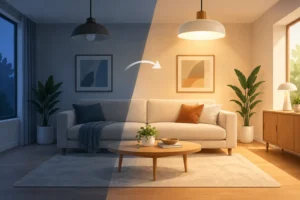
Most property owners do not want a colorful roofline 365 days a year. They want options. One-button red and green at Christmas is fun. A tasteful warm white for a dinner on the patio, visitors arriving after dark, or a normal weeknight is what makes the system part of the home.
A dedicated white diode gives the roofline a more refined appearance because it produces white directly rather than relying on a three-color blend. Colors from RGB-only fixtures can overlap differently at a distance, creating a faint tint or individual points that do not read as one consistent line of white. That may be acceptable on a temporary light string. It is less acceptable on a professionally designed system attached to a home you have worked hard to maintain.
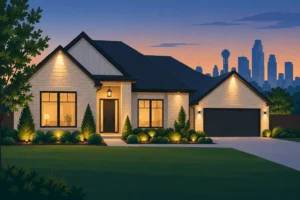
The right white temperature also matters. Very cool white can look harsh and commercial on a residence. A quality RGBW system can provide a comfortable warm-white appearance that complements traditional North Texas homes, modern elevations, stone facades, and dark exterior finishes. For commercial properties, a crisp dedicated white can improve nighttime visibility without making the building feel sterile.
There is a practical advantage, too. When the white diode handles white scenes, the red, green, and blue diodes are not doing unnecessary work trying to imitate white. That helps preserve more consistent color performance over the life of the system.
Color Performance Is About More Than the Number of Colors
An RGB-only system still offers millions of color combinations, and it can be the right fit for an owner who wants primarily bold, decorative color. If white is rarely used, the lower initial cost of some RGB products may seem attractive.
But the number of possible colors is not the same as quality of light. A luxury-grade lighting system is judged from the street. It needs sufficient output to be visible without looking like scattered dots, controlled beam direction that highlights the architecture, and fixtures spaced closely enough to create an intentional roofline presentation.
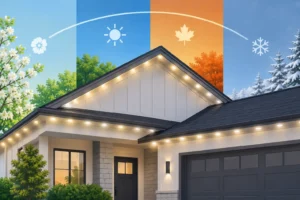
RGBW gives you the full celebration palette plus a useful neutral setting. You can set purple for a birthday, red, white, and blue for Independence Day, school colors for a playoff game, and then return to a beautiful warm white the next night. There is no need to choose between festive color and classic curb appeal.
For businesses, this flexibility has an even clearer payoff. A restaurant can use warm white for its standard evening appearance, brand colors for a promotion, and holiday scenes during the season. A retail location can remain recognizable after hours without running temporary decorations or depending on a staff member to climb a ladder and change displays.
Brightness, Spacing, and Beam Quality Still Matter
Do not let a product label make the whole decision for you. Not every RGBW outdoor lighting system delivers the same result. A poorly designed RGBW product can still look dim, spotty, or uneven if the LEDs are weak, the fixtures are spaced too far apart, or the track does not properly aim the light.
Brightness should be matched to the height, roofline depth, ambient street lighting, and the visual style of the property. Too little output disappears from the curb. Too much uncontrolled output can produce glare and distract from the architecture. Professional design accounts for the viewing distance and the way light interacts with soffits, fascia, peaks, and building materials.
Fixture spacing is just as visible as brightness. Widely spaced lights may create isolated dots rather than a clean, continuous architectural effect. Tighter spacing generally creates a richer display, particularly on tall rooflines and commercial facades. The goal is deliberate coverage, not simply placing a light every few feet and hoping it looks finished after dark.
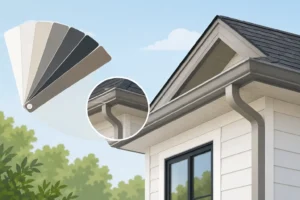
The installation method protects the daytime appearance as well. Premium permanent systems use color-matched aluminum track and concealed wiring so the lighting belongs to the structure instead of hanging below it. During the day, the installation should be discreet. At night, it should make your home or business the one people notice for the right reasons.
The Professional Installation Difference
Outdoor lighting is exposed to Texas heat, wind, rain, UV exposure, and seasonal temperature swings. The LEDs matter, but so do the wiring, connectors, controller, power delivery, mounting method, and serviceability. A system is only as dependable as the components and workmanship behind it.
DIY products and bargain installations often rely on visible cords, adhesive-backed strips, lower-output fixtures, or parts that are difficult to diagnose when something fails. They may work for a season, then become another project waiting for a weekend. That is not the promise of permanent lighting.
A contractor-led installation starts with the property itself. The design should account for roofline shapes, peaks, valleys, gables, electrical access, and the owner’s goals. Installation should use code-compliant components and clean routing, with an app controller configured so the customer can actually enjoy the system from day one.
At Starry Night Lights, that means treating the white setting with the same care as the holiday scenes. The goal is not merely to add color. It is to create a custom-fit lighting system that looks luxury grade every night, stays protected from the elements, and has local support when you need it.
When RGB May Be Enough
RGB can make sense in a few situations. A temporary display, a limited budget, or a project where vivid color is the only priority may not require a dedicated white diode. It can also be a reasonable option for accent areas that will almost never be used in white.
For a permanent roofline system, however, think beyond the first week you own it. Ask what setting you will use on ordinary evenings, how you want the house to look during the rest of the year, and whether the system will complement the architecture from the curb. If the answer includes clean white illumination, RGBW is the stronger long-term investment.
Choose the System You Will Use All Year
The best permanent lighting is not stored in a box, installed on a ladder each December, or limited to a few flashy presets. It should give you the freedom to celebrate every occasion while making your property look polished between them. Choose RGBW when you want the color, the convenience, and the kind of true white light that makes coming home after dark feel like an upgrade.