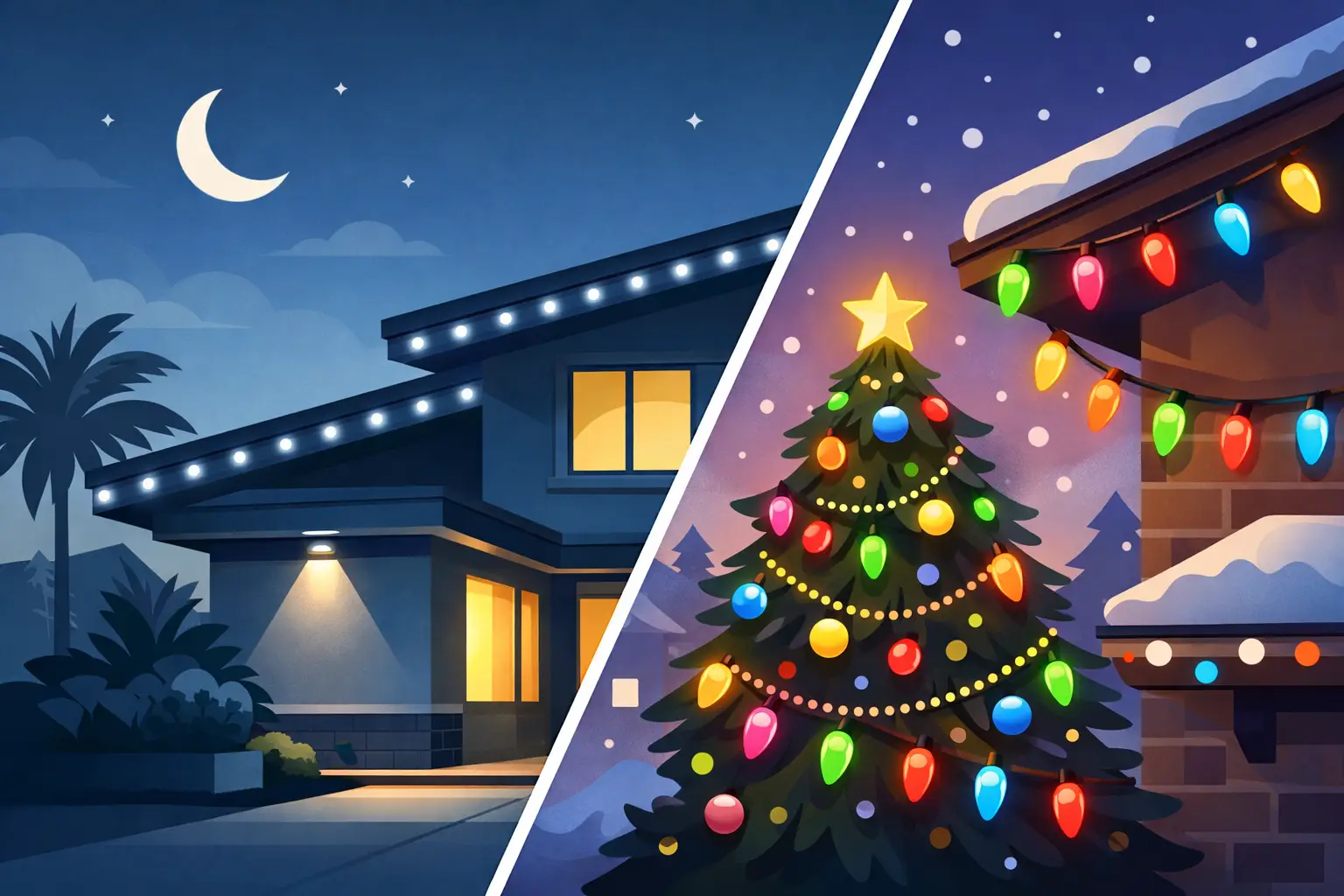
The difference between permanent lights versus Christmas lights becomes obvious the first time you want your home ready for a celebration without pulling out a ladder, untangling cords, or searching the garage for missing clips. For North Texas homeowners, the choice is not simply between two ways to decorate. It is a decision about curb appeal, safety, long-term value, and how much work your exterior lighting should require from you every year.
Traditional Christmas lights still have a place, especially for a one-time display or a specific holiday look. But a professionally installed permanent LED system is designed to make the house look finished after dark on Christmas Eve, on game day, for a birthday party, or on an ordinary Tuesday night.
Permanent Lights Versus Christmas Lights: The Real Difference
Seasonal Christmas lights are temporary by design. They are installed along rooflines, trees, columns, and landscaping for a few weeks or months, then removed, packed away, and repeated the following year. Even professional seasonal installation requires an annual appointment, annual labor, and a storage plan between seasons.
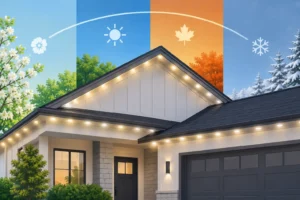
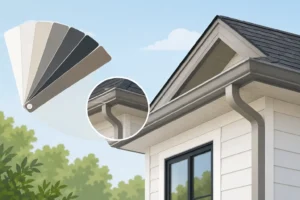
Permanent lights are an architectural lighting system installed once and built around the property. Quality systems use color-matched aluminum tracks mounted discreetly beneath the roofline, concealed wiring, purpose-built controllers, and programmable LED fixtures. During daylight hours, they should blend into the trim rather than look like exposed holiday hardware. At night, they become whatever the occasion calls for: warm white accents, Christmas colors, team colors, patriotic scenes, or a custom pattern for a family event.
That year-round flexibility is the first major advantage, but it is not the only one. The quality of the components and installation determines whether permanent lighting looks luxury grade or merely permanent.
Appearance: Temporary Decoration or Architectural Finish?
A seasonal display can be festive and dramatic. It can also look uneven when strands sag, bulbs point in different directions, or cords cross visible sections of the roofline. Homeowners often accept those compromises because the lights will come down soon.
Permanent lighting demands a higher standard because it remains on the home. The best installations begin with the architecture: roof pitch, fascia color, soffit depth, peaks, entryways, and the sightlines from the street. Tracks are cut and fitted for a custom appearance, while fixture spacing is planned to create a consistent wash of light rather than scattered bright dots.
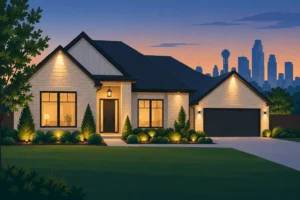
Brightness and beam quality matter here. Lower-output lights can disappear from the street or look washed out against stone, brick, and taller two-story elevations. Systems with high-output RGBW LEDs provide stronger color while also including dedicated warm-white diodes. That separate white channel is a meaningful distinction. Mixed-color LEDs can create a bluish or flat white; a true warm-white diode delivers the inviting, upscale roofline glow many homeowners want after the holiday season ends.
For a business, the visual difference can be even more valuable. A restaurant, retail site, or locally recognized storefront needs lighting that supports its appearance after hours without making the building look like a temporary event setup. Clean, evenly spaced roofline illumination helps the property remain visible and recognizable while still matching the brand.
Convenience Is More Than Skipping the Ladder
The annual Christmas-light routine is familiar: schedule installation, decide on a design, wait for the crew, enjoy the display, then schedule removal before the new year is too far along. Professional seasonal service removes much of the physical work, but it does not remove the recurring calendar task or ongoing expense.
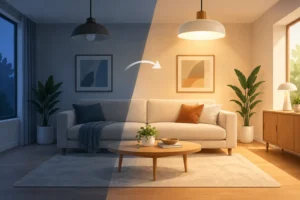
With permanent lighting, the physical installation is handled once. After that, app-based control puts the display in your hands. You can select a preset, set a timer, adjust colors, or create a scene without climbing onto the roof or handling a single extension cord. A warm white setting can run for evening curb appeal, then switch to orange and blue for a watch party or red, white, and blue for Independence Day.
That does not mean every homeowner needs permanent lighting. If you only light up for a few weeks in December and love changing your display every year, seasonal Christmas lights may suit you better. Some homeowners enjoy oversized ornaments, roof-mounted figures, wrapped trees, and other elements that permanent roofline lights are not intended to replace.
For families and businesses that want reliable lighting for multiple events throughout the year, the convenience changes the calculation. The system becomes part of the property, not another seasonal project.
Cost: Annual Spending Versus a Long-Term Investment
Christmas lights usually cost less at the beginning because they are temporary. Even when you hire a professional, the initial outlay is generally lower than a custom permanent system. That can make seasonal installation the right choice for a smaller budget, a short-term property plan, or a display that only matters during the holidays.
The trade-off is repetition. Seasonal lighting often includes yearly installation and removal labor, maintenance or bulb replacement, and potential storage concerns. Depending on the provider, customers may also pay for rentals, design changes, or replacement materials over time. Those costs can add up across many holiday seasons.
Permanent lighting has a higher upfront cost because it includes engineered components, custom fitting, electrical planning, professional installation, controller setup, and ongoing product support. It should be priced as a property improvement, not compared solely to a few boxes of retail string lights.
The lowest permanent-light quote is not automatically the best value, either. Inferior systems may use fewer LEDs, wider spacing, lower brightness, less refined track materials, limited white-light capability, or support that disappears when a controller fails. A premium system should be evaluated by how it looks on your actual home, how it is installed, and whether the contractor will be available years later.
At Starry Night Lights, that means focusing on custom-fit tracks, concealed wiring, high-output RGBW lighting, code-conscious installation practices, and support after the crew leaves. For a system intended to serve the property for decades, those details are not extras.
Safety and Reliability Matter in North Texas
Hanging seasonal lights is not automatically unsafe, but roof work always carries risk. Ladders, wet weather, steep pitches, overloaded connections, damaged cords, and improvised attachment methods can turn a decorating project into an avoidable problem. Professional seasonal installers reduce much of that risk, but the setup still has to be installed and removed every year.
A permanent system eliminates repeated roof access for holiday lighting. Properly installed components are secured, wiring is managed intentionally, and electrical connections are selected for exterior use. The goal is a finished system that does not rely on loose cords, temporary clips, or a patchwork of connections exposed to changing weather.
North Texas weather deserves special consideration. Heat, sun exposure, wind, heavy rain, and sudden cold snaps are hard on consumer-grade materials. A permanent system should be specified for outdoor service and installed with the roofline, drainage paths, and electrical load in mind. This is where contractor workmanship matters as much as the lights themselves.
Lighting can also improve after-dark visibility around a property, particularly when warm white scenes illuminate the roofline and entry area. It should complement, not replace, dedicated security lighting or a security system where those are needed.
Which Option Fits Your Property?
Choose seasonal Christmas lights when the goal is a one-season display, you want to keep upfront spending low, or you prefer a totally different decorative concept each year. A professional seasonal installation can still deliver a polished holiday look without requiring you to do the ladder work.
Choose permanent lighting when you want the home or business to look exceptional after dark in every season. It is especially compelling for property owners who value one-button holiday scenes, year-round warm white elegance, celebration-ready color, and freedom from annual installation and storage.
The best-looking house on the block is rarely the one with the most random bulbs. It is the one with lighting that fits the architecture, shines with intention, and works exactly when the moment calls for it. Before committing to either route, look at your property from the street after sunset and ask a practical question: do you want a holiday decoration, or do you want a lighting system you will enjoy all year?