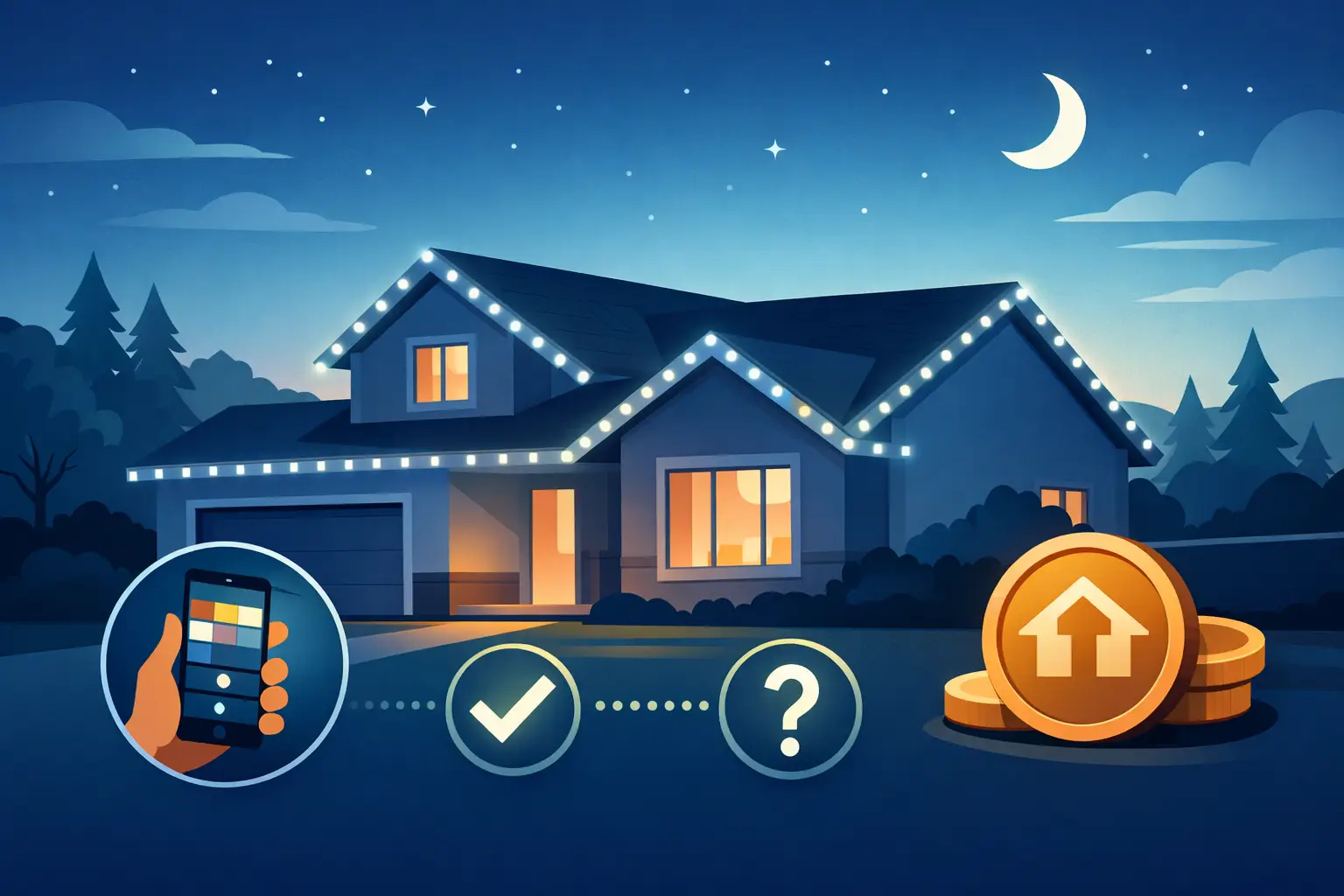
The best-looking house on the block should not go dark on January 2. Permanent LED roofline lighting gives North Texas homeowners and businesses a clean, architectural glow for every season, then switches to full-color celebration lighting whenever the occasion calls for it. No tangled strands. No storage bins. No climbing a ladder when the holiday calendar gets busy.
This is not a strip of decorative LEDs stuck beneath the eaves. A professionally designed system is built into the roofline with color-matched aluminum track, concealed wiring, high-output fixtures, and controls that put everyday white light, holiday scenes, and custom colors in one app. The difference shows after dark – and years later.
What Permanent LED Roofline Lighting Actually Adds
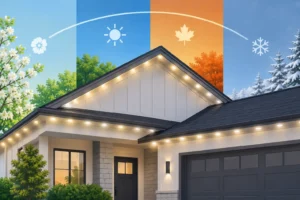
A permanent system earns its place on the home or building during more than Christmas. Set warm white for a welcoming evening exterior, team colors for game day, school colors for graduation, orange and purple for Halloween, or a patriotic scene for July Fourth. A few taps can change the entire mood of a property without changing a single bulb.
For homeowners, that means a polished exterior that supports entertaining, family milestones, and curb appeal throughout the year. For a business, it means staying visible after sunset, reinforcing brand colors, and participating in community events without paying for a new seasonal installation every time.
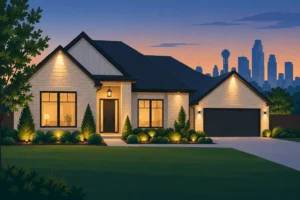
The convenience matters, but so does the presentation. Proper roofline lighting follows the architecture rather than distracting from it. The lights should look intentional from the street, with crisp, even scallops of color across the fascia instead of random bright dots, sagging wire, or harsh glare against the siding.
Why Professional Systems Look Different After Dark
Not all permanent lighting is engineered to create the same result. Lower-cost DIY kits and many nationally marketed systems can appear attractive in product photos, yet their limitations become obvious once installed on a real roofline. Fixture spacing may be wide, output may be weak, and the white setting may have a bluish cast rather than the warm, inviting color most homeowners expect.
Luxury-grade systems use tightly spaced, high-output RGBW LEDs. The separate warm-white diode is a major distinction. RGB lights can mix red, green, and blue to approximate white, but mixed white often looks cool, uneven, or slightly tinted. A dedicated warm-white diode produces the classic clean glow that works beautifully for daily use, Christmas displays, and upscale architectural lighting.
Brightness is another area where specifications matter. A roofline needs enough output to be seen clearly from the street without looking like a row of exposed spotlights. The goal is controlled, even illumination that holds its color across long runs, corners, peaks, and multiple elevations. More lumens are not automatically better, but underpowered lights rarely give a large home or commercial property the finished impact it deserves.
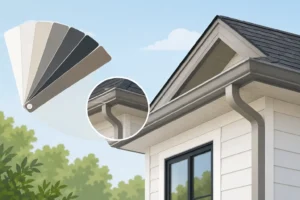
Track and wiring deserve equal attention. Color-matched aluminum track protects the fixtures and helps them blend into the fascia during the day. Concealed wiring prevents the unfinished look of cords and clips draped along the roof edge. At Starry Night Lights, the system is custom-fit to the property so transitions, corners, and roof peaks look planned rather than pieced together.
Permanent LED Roofline Lighting Is Not a One-Size-Fits-All Job
Every property presents different design decisions. A single-story ranch home may benefit from a simple, elegant front roofline. A two-story home with gables, dormers, and a backyard entertaining area may call for a broader layout that creates balance from every visible angle. A restaurant or retail location may need lighting that emphasizes entry points, signage, and the roofline customers see from the road.
A professional design begins with the architecture, not a preset kit length. The installer considers fascia color, roof pitch, roofline visibility, outlet access, control placement, and where clean wire paths can be hidden. They also account for the way lights will read from the street. The fixture closest to a front walk does not need the same visual treatment as a high second-story peak viewed from 100 feet away.
That planning is why permanent lighting can feel like a property upgrade instead of seasonal decor. During the day, the track should be discreet. At night, the light pattern should frame the building with consistent spacing and intentional lines.
The Roofline Is Only Part of the Experience
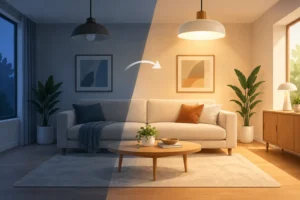
The controller and app determine whether the system is enjoyable after installation. A quality app-controlled system lets owners choose colors, adjust brightness, create schedules, and save scenes without walking outside. Set a warm-white schedule for evenings, turn lights off at bedtime, or schedule holiday colors to appear automatically.
For families, this makes celebrations easy. For businesses, it prevents a staff member from having to remember the lighting schedule every night. Automation can also support a more secure, occupied appearance after dark, especially when exterior lighting is programmed thoughtfully.
The app should be simple for the owner, but the electrical and setup work behind it should be handled by a qualified contractor. Professional installation includes proper power planning, code-compliant components, secure mounting, controller setup, and customer education before the crew leaves.
The Trade-Off: Upfront Cost Versus Years of Use
Permanent lighting costs more than buying a few boxes of seasonal strands. That is the honest trade-off. A professionally installed system includes custom design, premium components, installation labor, electrical planning, app configuration, warranty coverage, and ongoing local support.
But the lowest initial price is rarely the best comparison. Seasonal lights require annual installation and removal, storage space, replacement bulbs, damaged cords, and ladder time. DIY permanent kits can reduce some of that effort, but homeowners still take on layout decisions, roof work, electrical details, mounting, weather exposure, troubleshooting, and the question of who helps when a section fails.
A professionally installed system is designed to stay in place for decades, with high-voltage electrical efficiency, durable components, domestic product support, and protection built around long-term ownership. Starry Night Lights offers a 20-plus-year protection proposition because permanent lighting should be treated as a lasting exterior investment, not a short-lived gadget.
The right choice depends on your priorities. If you only want a temporary December display and enjoy putting up lights yourself, seasonal strands may still fit. If you want year-round use, a finished daytime appearance, strong brightness, app control, and no annual ladder work, permanent roofline lighting is the better long-term answer.
Questions to Ask Before You Choose a System
Before approving a proposal, ask how the lights produce white, how far apart fixtures are spaced, and whether the product uses concealed, color-matched track. Ask about brightness, weather-rated construction, voltage, warranty terms, and who provides support if you need help years from now.
Also ask who will install it. Roofline lighting is visible every day, so workmanship is not a minor detail. Poorly routed wire, uneven track, inconsistent spacing, and exposed connections can spoil even a good product. A contractor should be able to explain the design, protect the exterior during installation, and leave you confident using the app.
For commercial properties, ask how the system can support brand colors, scheduled operating hours, and seasonal campaigns. The same installation that gives a storefront a refined white outline on a normal week can become a high-energy event display for a grand opening, local festival, or playoff run.
A Better Way to Celebrate After Dark
Permanent roofline lighting is at its best when it feels effortless. Your home can be softly lit for an evening on the patio, then ready for a birthday, holiday, or Friday night football game without another trip to the attic. Your business can stay recognizable after hours without relying on temporary displays that need constant attention.
Choose the system for the nights you will actually enjoy, not just the first night it turns on. A thoughtful design, warm-white capability, premium brightness, clean installation, and local support turn exterior lighting into something you look forward to using all year long.